
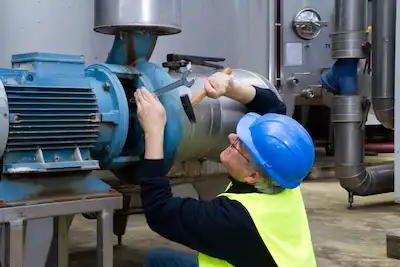
If you rely on a water pump to supply water to your home, it’s a good idea to know more about it. As such, we’ve prepared a guide on troubleshooting common water pump problems.
Low water pressure or sputtering faucets
One of the most basic water pump problems is low water pressure. For starters, the first thing you need to do if you have this problem immediately after installing a new water pump is to ensure you have picked the right type. Depending on your needs, the type of water pump you require differs. Of course, if that’s not an issue, then it may be an excessive amount of air in the system, clogged filters or pump valves, or a leak somewhere in your system. Almost every one of these requires professional assistance. The only relatively simple solution you can do in the meantime is to clean the clogs.
Increase in power consumption
An increase in power consumption by your water pump is just a side-effect of one of the common water pump problems: failure for the pump to turn off. The reason this happens is always a severe leak. The pump needs to continuously work to offset the demand placed on your water supply system. And because of this, it increases your power consumption. However, the only way to deal with this is to look for professional help. Finding a leak is difficult, especially if it is happening somewhere on your property where you can’t easily notice a sudden increase in dampness. It is best to turn off the water pump while you look for the leak since working continuously in this manner can damage it.
A short cycling water pump
Usually, a water pump will work for around two to five minutes to pressurize the system properly, then turn off until you open a faucet and let some of that water pressure out. Then, the cycle repeats, allowing you to have a stable level of water pressure in your pipes. However, if your water pump works on short, stuttering cycles, it is a surefire sign there’s a problem. This is almost always caused by having an inadequate air charge in the tank, too much air in the water tank, or a pipe blockage that makes it difficult for water pressure to equalize in the system. Unless you are confident you can fix the tank’s air volume control, look for professional assistance with your water pump.
The pump produces odd noises
One of the more serious water pump problems is if you notice your water pump suddenly grow louder than before. It can even start producing sounds that resemble ticking or grinding. The cause of this is a problem with the pump’s bearing, typically indicating that it has become worn. This normally won’t happen to a new water pump. But it is a risk for older models. The bearing needs to be replaced. But it’s not too difficult to learn how to do it, so it is an accessible repair. Of course, if you are looking into hiring residential movers in Denver and planning to take your water pump with you, make sure you rely on help from local experts who you know will protect your belongings since damage during transport can necessitate a complete replacement of your water pump and can produce symptoms like this, too.
Problems with water quality
There are two reasons why your water pump might be drawing dirty water. First, it’s because the muck and dirt on the bottom of the wall have been stirred up, overwhelming the filters, or the well is contaminated. In this scenario, you need to turn off the pump, clean it, and give the water time to settle while it undergoes treatment. The second option is that your pump’s filters are failing and must be quickly replaced. This, too, would require the pump to be turned off, removed, and cleaned before engaging it again. Leaving dirt in the pump system is not smart and can lead to a breakdown down the road.
The pump refuses to start
If the pump outright refuses to start, there are a couple of possible causes. First, there’s the pump’s circuit breaker, plug, and cable. However, the problem might be that the pump’s motor has burned out. This is a telltale sign that you need a new water pump since getting just a replacement motor is very rarely worth it.
On a Franklin unit in particular it is worth checking the signs of pump failure before ordering a motor, since several of them point to the pump rather than the winding.
Pump that is leaking water
It can be alarming to notice puddles or dripping water around or under your water pump. However, this is one of the more straightforward water pump problems and not particularly difficult to solve. It is always a sign of worn or damaged water pump seals, and you can typically find a replacement very easily. Replacing them is not hard work either on most water pump models and is something you can master with guidance.
No water in your home at all
The final water pump problem is when it looks like it’s working, yet your water seems to vanish on the way to your home. It can be tempting to blame the pump in this scenario, but you’d be wrong in nine cases out of ten. Instead, you almost certainly have a plumbing problem. A very severe one since this indicated a completely busted pipe rather than just a bad leak. After all, if no water reaches your home, the entire water pressure goes through the busted pipe. However, not all is bleak – this problem is relatively easy to notice, as you’ll most likely see a puddle forming somewhere in your yard.
A word of warning on the water pump problems
Despite now knowing how to troubleshoot common water pump problems, you might not be able to deal with them. As we hinted at throughout the text, many of the fixes to these problems require professional knowledge or even specialized tools. As such, you are almost always better off calling in a professional instead of taking the risk and damaging your pump further.
Simple Fixes You Can Try Yourself
Not every fault needs a callout. If pressure has dropped, check the pressure switch settings first and adjust them to the manufacturer’s figures before assuming the pump is failing.
Clogged pipework is another common culprit and often clears with a pipe cleaner or a plunger. Minor leaks at a joint will sometimes hold with a sealant as a temporary measure.
Short cycling usually points at a waterlogged pressure tank rather than the pump itself, and the tank is the cheaper part to replace.
Know where to stop. A broken mechanical seal, a burnt motor or anything involving the well itself needs a professional. Running a pump that is already failing turns a repair into a replacement.
Preventing the Next Failure
Most pump failures announce themselves before they happen. Regular inspection is what turns a breakdown into a scheduled repair.
Walk the pump and its surroundings periodically and look for leaks, corrosion at fittings and any change in the noise it makes. A new sound is almost always the first symptom of wear. Rapid cycling is nearly always the pressure tank rather than the pump, because a tank that has lost its air charge gives the motor nothing to rest against.
Check the pressure settings against the manufacturer’s specification rather than against what feels right. A misadjusted cut-in or cut-out costs efficiency immediately and shortens pump life over a season.
Inspect the pressure tank for waterlogging, which is the most common cause of short cycling and the failure that quietly wears out more pumps than anything else on this list.
Keep the intake and pipework clear. A pump working against a partial blockage draws more power and runs hotter than the same pump on a clean line.
When a pump is genuinely past repair, the pump range we stock lists flow and pressure per model so you can match the duty the old one was doing.
Frequently Asked Questions
What is the most common problem of a water pump?
The most common problem is a pump that runs but will not build pressure, which usually means lost prime, air entering the suction side, or an impeller worn enough that water slips back inside. On a well system, a pump that starts and stops every few seconds is almost always the pressure tank rather than the pump.
What can be mistaken for a bad water pump?
A waterlogged pressure tank is mistaken for a bad pump more than anything else, because it makes the pump cycle constantly and the pressure swing. A pressure switch set too low, a clogged filter, a closed valve or a failed foot valve all produce symptoms that look like pump failure but cost far less to fix.
How do you fix a water pump that is not pumping water?
Start by confirming there is water to pump and that the pump is primed, then check the suction side for a blocked strainer, a closed valve or a joint drawing air. Refill the casing through the priming port and restart. If pressure still does not build within a minute, stop rather than running it dry.
What are five common causes of water pump failure?
Running dry, which destroys the mechanical seal in seconds. Abrasives eroding the impeller. Short cycling caused by a failed pressure tank. Cavitation from a starved suction side. Bearings worn by age or misalignment. Almost every failure traces to one of those, and most are conditions around the pump rather than the pump itself.