
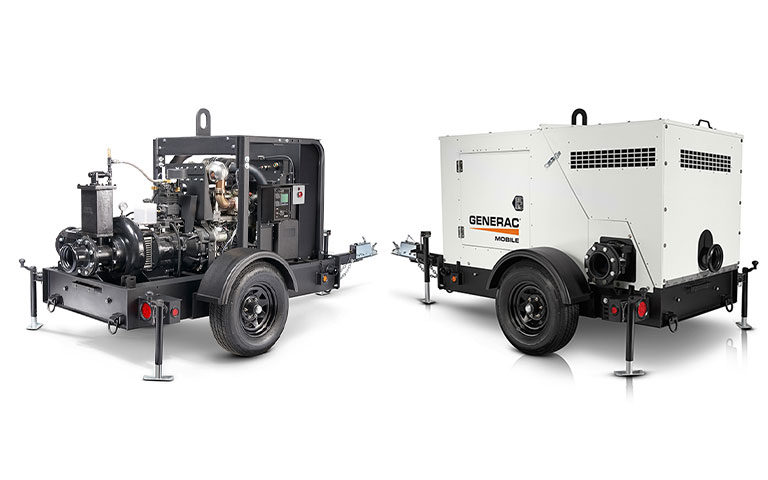
A diaphragm trash pump on a site does not fail politely. Output drops, the trench fills faster than it empties, and someone has to work out which part to order before the crew loses another day.
The good news is that these pumps are built to be repaired. Almost everything that wears is a stocked part, and the identification is simpler than the part numbers make it look.
Where Do You Find CH&E and Magnum Replacement Parts?
CH&E and Magnum diaphragm parts come from pump distributors rather than general suppliers, because diaphragms, flappers and seats are sized by pump series and not sold as generic fittings. What you need before ordering is the discharge size and the series number from the pump plate.
Key Takeaways
- Diaphragm size matches the pump’s discharge size, 2, 3 or 4 inch.
- The series number on the plate decides flappers and seats.
- Never size a diaphragm by measuring the old one. It has stretched.
- Diaphragms and flappers wear together, so replace them together.
- Many Magnum and CH&E parts interchange, but not all of them.
How to Identify the Part You Need
| What to check | Where it is | What it determines |
|---|---|---|
| Discharge size | Outlet, 2, 3 or 4 inch | Diaphragm size |
| Series number | Pump plate | Flapper, seat and kit |
| Diaphragm material | Existing part or duty | Rubber, neoprene or TPE |
| Engine or motor | Powerhead plate | Engine service parts |
The series numbers group predictably. The 5400 and 6400 families are the 2 inch pumps, and the 5500 and 6500 families are the 3 inch. Once you have the series, the CH&E replacement diaphragms listing narrows to a handful of parts rather than a catalog.
Manuals and parts breakdowns for these pumps are on our Generac manuals page, which is usually faster than working from a photograph of a worn part.
Which Diaphragm Material Should You Order?
Material decides how long the part lasts far more than the brand on the box does.
- Rubber: the general purpose choice for water, mud and site dewatering.
- Neoprene: better across mild chemicals and a wider temperature range.
- TPE: the longest flex life, which matters most on pumps that cycle often.
Flex cycles rather than running hours govern the life of any of them, which is why a pump short cycling on a small sump can outrun one working a full trench. There is more on that trade in our guide to how long a diaphragm pump lasts, and the case for genuine parts is set out in our comparison of CH&E parts against generic replacements.
What Wears, and What to Order With It
Three components account for nearly every loss of output on these pumps, and they wear at similar rates.
The diaphragm itself fatigues from flexing and usually softens before it splits, so performance fades rather than stopping. Flappers and seats wear at the valve, letting water slip back on each stroke, which looks identical to a tired diaphragm from outside the pump. Cover bolts and gaskets are the cheap third item worth replacing while the pump is open.
Ordering all three together costs little more than the diaphragm alone and avoids opening the pump twice in a season. If output is falling and you are not sure which of them is responsible, our notes on diagnosing a diaphragm pump work through it.
Choosing the Pump in the First Place
If the pump is beyond parts, or you are adding to a fleet, the comparison of models by duty is in our guide to CH&E pumps, and sizing for a specific job is covered in choosing a Magnum pump.
Frequently Asked Questions
Where can I find CH&E repair parts?
CH&E repair parts are sold through pump distributors that stock the wet end components, since diaphragms, flappers and seats are sized by pump series rather than sold as generic fittings. Ken’s Distributing carries diaphragms in 2, 3 and 4 inch sizes across the 5400, 5500, 6400 and 6500 series, along with the flappers and seats that wear at the same rate.
What size diaphragm does my CH&E pump take?
The diaphragm size matches the pump’s discharge size, so a 2 inch CH&E pump takes a 2 inch diaphragm and a 3 inch pump takes a 3 inch. Confirm it against the series number on the pump plate rather than measuring the old part, because a stretched or torn diaphragm no longer reads true. The series number also determines the flapper and seat. On the Magnum side the equivalent part is the 3 inch Magnum rubber diaphragm.
How often should a CH&E diaphragm be replaced?
A CH&E diaphragm should be replaced once output starts falling rather than on a fixed schedule, which on site dewatering usually works out at one or two seasons. Life is counted in flex cycles, so a pump short cycling on a small sump wears one faster than a pump running steadily. Inspect the flappers at the same time, because they wear together.
Are Magnum and CH&E pump parts the same?
Many Magnum and CH&E parts interchange because the pumps share a design lineage under Generac, but they are not universally the same and the series number decides it. Check the plate before ordering rather than assuming a part fits across both lines. A distributor can cross-reference the number when a part has been superseded.
CH&E and Magnum Parts at Ken’s Distributing
Ken’s Distributing stocks diaphragms, flappers, seats and repair kits for CH&E and Generac Magnum pumps, in 2, 3 and 4 inch sizes and in rubber, neoprene and TPE. Send us the discharge size and the series number off the plate and we will confirm the right part before you order.