
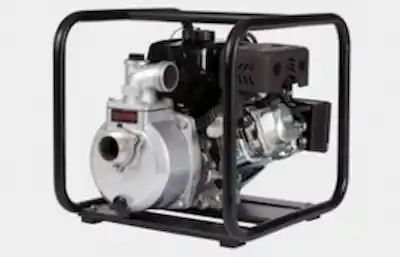
A water transfer pump moves water from where it is to where you need it. That is the whole job, and it is why the category exists separately from well pumps, sump pumps and irrigation pumps, which are all built around a fixed installation.
A transfer pump is portable by design. You carry it to the water, run it for as long as the job takes, and move it again. Draining a pool, clearing a flooded basement, emptying a tank, filling a sprayer, moving water between containers on a farm.
What Is a Water Transfer Pump?
A water transfer pump is a portable pump built to move a large volume of water from one place to another, rather than to hold pressure in a fixed system. It can pull water upward about 25 feet at most, because atmospheric pressure limits suction lift, but it can push water considerably further. Choose one by gallons per hour at your real head and hose length, not by horsepower.
Key Takeaways
- Transfer pumps move volume. Booster pumps make pressure. They are not interchangeable.
- Suction lift caps at roughly 25 feet for any pump above the water. A submersible avoids that limit entirely.
- Rated flow is quoted at zero head. Add lift and hose and the real figure can halve.
- Dirty water needs a diaphragm or semi-trash pump. A standard centrifugal wears out on sediment.
- Flush after dirty jobs and drain before frost. Those two habits prevent most portable pump failures.
Which Transfer Pump Suits Which Job?
| Pump type | Best for | Watch out for |
|---|---|---|
| Centrifugal | Clean water, high flow, low cost | Usually needs priming before it draws |
| Self-priming | Repeated moves, pump sits above water | Costs more than a plain centrifugal |
| Diaphragm | Mud, sand and solids | Lower flow for the same power |
| Submersible | Draining pits and flooded spaces | Must be lifted out to service |
What a Water Transfer Pump Actually Does
It moves volume rather than generating pressure. That distinction matters more than any other spec on the page.
A booster pump exists to raise pressure in a system that already has water. A well pump exists to lift water from depth. A transfer pump exists to shift a large quantity of water across a modest distance, quickly, and then stop.
Buying on horsepower alone is the common mistake. What you actually care about is gallons per hour at the head and hose length you will really be using.
Types of Water Transfer Pump
Centrifugal
A rotating impeller pulls water in and throws it out through the discharge. High flow, simple, cheap to maintain, and the default choice for clean or lightly dirty water.
The limitation is priming. Most centrifugal transfer pumps need the casing filled before they will draw, unless they are specifically self priming.
Self-Priming
These clear air from the suction line themselves and reprime after the line drains. On a job where the pump sits above the water and gets moved repeatedly, that saves real time.
Diaphragm
A flexing membrane draws water through check valves instead of using an impeller. There is nothing to jam, so these handle water carrying mud, sand and solids that would stop a centrifugal within minutes.
They move less volume for the same power, which is the trade you make for that tolerance.
Submersible
The pump sits in the water and pushes rather than pulls, so there is no suction limit to work against. Best for draining a flooded space or emptying a pit from the bottom.
They run quietly because the water muffles them, and they prime themselves by definition.
How Far and How High Can a Transfer Pump Move Water?
Two separate limits apply and buyers routinely confuse them.
Suction lift is how far the pump can pull water upward to reach it. Atmospheric pressure caps this at roughly 25 feet for any pump that sits above the water, and in practice you should plan for less.
Discharge head is how far it can push water once it has it, and that figure is much larger but falls away with distance. Every foot of vertical lift and every length of hose costs flow.
A pump rated at 3,000 gallons per hour is quoting that at zero head. Add fifteen feet of lift and a long hose run and the real figure can be half that. Read the performance curve rather than the headline number.
The suction limit is physics rather than a design choice. Engineering references on net positive suction head set out how water temperature and altitude reduce it further.
Matching the Pump to the Water
Clean water gives you the widest choice and the cheapest options.
Water carrying silt, sand or debris needs a semi-trash or diaphragm pump. Running dirty water through a standard centrifugal wears the impeller quickly and the failure is gradual, so it usually gets blamed on the pump rather than the application. For portable transfer work the 2RLAG-1L aluminum transfer pump is a typical starting size.
Salt water, chemicals and fuel all need compatible wetted parts. A pump rated for fresh water will corrode in salt and can fail dangerously with fuel.
If you are unsure which family fits, our extensive guide works through the wider range.
Sizing Without Guessing
Work out the volume you need to move and the time you have to move it. A 500 gallon tank you want emptied in 20 minutes needs 1,500 gallons per hour at your actual head, not on paper.
Measure the vertical distance from the water surface to the discharge point, and add the hose run. Both reduce output.
Then size up rather than down. A pump running comfortably below its maximum lasts longer than one working at its limit every time you use it.
Maintenance That Actually Matters
Transfer pumps live harder lives than fixed installations because they get moved, dropped and stored wet.
Flush the pump with clean water after any dirty job. Sediment left inside dries hard and abrades the impeller on the next start.
Drain it fully before storage in freezing conditions. Trapped water expands and cracks housings, and it is the single most common way a working pump dies over winter.
Check the intake screen and the seals each season. On a portable pump the strainer takes the abuse and is the cheapest part to replace.
Frequently Asked Questions
What does a water transfer pump do?
A water transfer pump moves water from one place to another, quickly and in volume, rather than holding pressure in a system. It is used for draining pools and flooded areas, emptying tanks, filling sprayers and moving water between containers. Unlike a well pump or a booster pump, it is portable and used on demand rather than installed permanently in one position.
How far can a transfer pump move water?
A transfer pump can pull water upward roughly 25 feet at most, because atmospheric pressure limits suction lift for any pump sitting above the water. Pushing is different: discharge distance is far greater and depends on the model, though flow falls as vertical lift and hose length increase. A submersible avoids the suction limit entirely by sitting in the water.
What kind of pump can I use to transfer water from one tank to another?
To transfer water from one tank to another, a self-priming centrifugal pump is usually the right choice for clean water, because it clears its own suction line each time you move it. For water carrying sediment or solids, use a diaphragm pump instead. Match the flow rate to the tank volume and the time you have available.
What is the difference between a transfer pump and a booster pump?
The difference between a transfer pump and a booster pump is what each one produces. A transfer pump moves volume from one location to another and is portable. A booster pump raises pressure in a system that already has water, and is installed permanently. Buying a transfer pump to fix low household pressure will not work, and neither will the reverse.
Choosing and Buying
Once you know the water type, the volume and the head, the choice narrows quickly. Most buyers over-specify horsepower and under-specify the pump family, which is the expensive way round.
We stock centrifugal pumps for clean water work, diaphragm pumps for water carrying solids, and portable Red Lion transfer pumps for general use.
If the job involves a specific brand of equipment already on site, our guidance on choosing the right pump covers matching to what you run.
Not sure which fits? Tell us the volume, the distance and what is in the water, and we will size it with you before you buy. Browse the full water pump range to compare.