
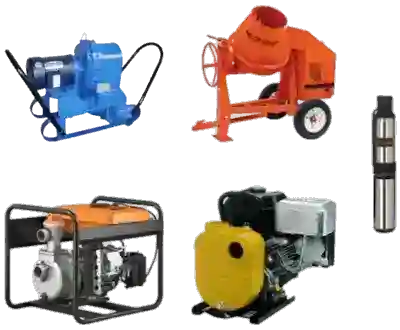
A water booster pump raises the pressure of water you already have, which makes it one of the hardest working pieces of equipment in a building. It runs every time somebody opens a tap, and unlike a well pump it often sits indoors where nobody notices it until the pressure drops.
The honest answer to how long one lasts is that it depends far less on the badge on the casing than on how often the pump is asked to start. Two identical units can be five years apart in service life because of a single ten dollar component elsewhere in the system.
How Long Do Booster Pumps Last?
Most water booster pumps last 10 to 15 years in a home and 8 to 12 years in continuous commercial service. Sizing, water quality and the condition of the pressure tank move a given pump within that range, and a badly cycling system can cut it to under five years.
Key Takeaways
- Starts wear a booster pump out faster than running hours do.
- A waterlogged pressure tank is the single most common reason a booster dies early.
- Oversizing shortens life, because a pump too large for the demand cycles constantly.
- Dry running kills the mechanical seal in minutes, not months.
- Past ten years, a second major repair usually costs more than replacement.
Expected Life by Duty
| Application | Typical service life | What usually fails first |
|---|---|---|
| Home pressure boosting | 10 to 15 years | Pressure switch, then mechanical seal |
| Irrigation and sprinkler boosting | 8 to 12 years | Impeller wear from sediment |
| Light commercial, daily duty | 8 to 12 years | Motor bearings |
| Continuous or multi-story systems | 7 to 10 years | Seals and bearings together |
| Constant pressure (variable speed) | 12 to 18 years | Electronics before the wet end |
The bottom row is the one worth pausing on. A variable speed pump ramps to match demand instead of slamming on at full power, so it accumulates a fraction of the starts. That is why constant pressure systems outlast fixed speed units even though they are more complex.
What Actually Shortens a Booster Pump’s Life
Short cycling
A pressure tank holds a cushion of compressed air that lets the pump rest between calls for water. When the tank loses that charge, the pump switches on for every small draw. Checking the tank precharge takes five minutes and should sit about 2 psi below the cut-in pressure, and it is the highest value maintenance task on the whole system.
Being too big for the job
An oversized pump reaches cut-out pressure almost instantly and shuts off, then repeats. Buyers often assume more horsepower means more reliability, but on a booster the opposite is true. Correct pump sizing means matching the pressure boost and flow the building actually needs at peak demand.
Water quality
Sand and grit grind away impeller clearances, so a pump that once delivered 40 psi gradually delivers 30. Hard water leaves scale on the same surfaces. Neither failure is dramatic, which is why declining pressure is often blamed on the municipal supply when the pump is the cause.
Running dry
The pumped water cools and lubricates the mechanical seal. Lose suction and the seal faces overheat within minutes. This is the failure mode that turns a repairable pump into scrap, and it is entirely preventable with low-pressure cutoff protection.
How Do You Know a Booster Pump Is Failing?
- Pressure drops with clean filters. Worn impellers or a failing seal, not the supply.
- The pump cycles rapidly. Check the tank precharge before condemning the pump.
- Grinding or squealing. Bearings. On small boosters this rarely justifies a repair.
- The motor trips its overload. Binding, or a motor drawing current it should not.
- Water around the base. A weeping mechanical seal, which will not improve on its own.
Vibration deserves its own note. A booster that has started walking on its pad is usually misaligned or sitting on failed isolators, and the vibration itself then destroys the bearings and pipe joints around it. The Hydraulic Institute, the industry body that publishes American pump standards, treats vibration monitoring as a core reliability practice for exactly this reason (Hydraulic Institute).
Repair or Replace?
A rough rule that holds up well in the field: if the repair costs more than half of a new pump, or the unit is past ten years and needs its second significant repair, replace it. Pressure switches, check valves and pressure tanks are always worth fixing because they are cheap and they protect the pump. Seals and bearings are the judgment call, and motors on small boosters almost never are.
Age changes the arithmetic in a way people underestimate. Rebuilding an eleven year old pump buys perhaps two years, while the same money toward a new constant pressure unit buys fifteen and cuts the running cost. The Red Lion RBSS-75FC is a common replacement for residential systems in this position.
Making a Booster Pump Last
- Check the tank precharge annually with a tire gauge, pump off and system drained.
- Clean strainers before they restrict suction and starve the pump.
- Log the pressures at cut-in and cut-out, since a drifting cut-out is an early warning.
- Fit dry-run protection on anything fed by a tank, cistern or well.
- Give it air. Motors in unventilated closets run hot, and heat is what ages windings.
Most of this list is the same discipline that applies to any pumped system, and the broader routine is covered in our guide to water pump maintenance. Centrifugal units have their own wear pattern, set out in these centrifugal pump notes. Diaphragm pumps age differently again, as the diaphragm longevity guide explains.
A Booster Pump Is Not a Well Pump
These two get confused constantly, and the distinction matters for lifespan because they fail for different reasons. A booster raises pressure in a line that already has water. A well pump lifts water that has none. Submersible well pumps generally last 8 to 15 years and their enemy is sand and cycling, and the specifics are covered in our well pump maintenance guide.
If you are not certain which one you have, the booster pump comparison walks through it. Diagnosing a booster problem on a well pump, or the reverse, is a common and expensive detour.
Frequently Asked Questions
How long do booster pumps last?
A water booster pump normally lasts 10 to 15 years in residential service and 8 to 12 years under continuous commercial duty. The number of starts matters more than the number of hours. A pump that cycles on and off constantly because of a waterlogged pressure tank can fail in three to five years, while the same pump on a healthy tank reaches the top of its range.
What is the most common cause of booster pump failure?
Short cycling is the most common cause. Every start draws high current and heats the motor windings, so a pump switching on and off dozens of times an hour wears out far faster than one running in steady bursts. The usual culprit is a pressure tank that has lost its air charge, which is a cheap fix that prevents an expensive one.
How do you know when a booster pump needs replacing?
Replace the pump when pressure drops even though the system is clear, when the motor trips its overload repeatedly, or when a second major repair lands on a unit already past ten years. Grinding and squealing point to failed bearings, which on most residential boosters costs more to fix than the pump is worth.
Can a booster pump run dry?
No. Running dry destroys a booster pump quickly because the water it moves is also what cools and lubricates the mechanical seal. Without it the seal faces overheat and score within minutes, and the leak that follows lets water reach the motor. Any booster fed from a tank or a well should have low-pressure or flow protection fitted.
Booster Pumps and Replacement Parts
Ken’s Distributing stocks pressure boosting systems along with the pressure switches, tanks and seal kits that keep them running. Browse the Red Lion range or contact us with your flow and pressure requirements and we will size the correct unit.