
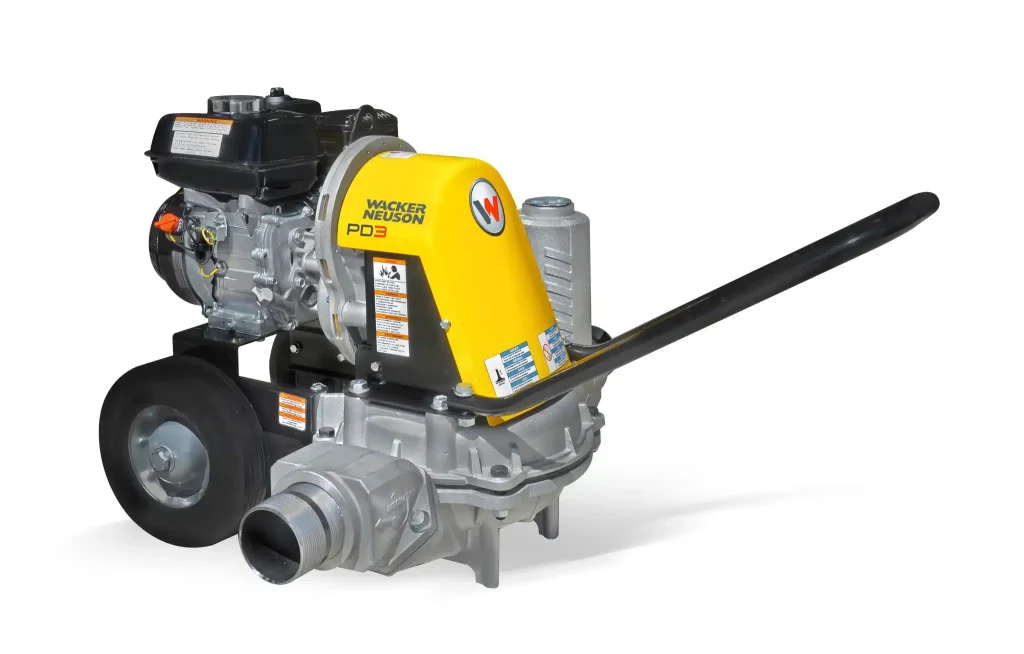
A Wacker Neuson pump is commonly selected when a job site demands reliable water removal in tough conditions.
Standing water slows progress, increases safety risks, and can delay an entire job.
That is why trash pumps remain essential for construction crews and site managers.
Trash pumps are designed to move water mixed with debris and solids without frequent clogging.
Unlike clean water pumps, these units are built for harsh environments and repeated relocation across a job site.
Their heavy-duty construction allows them to handle demanding workloads day after day.
This page explains how a centrifugal trash pump works, what features affect performance, how prices vary, and what customers should review before they add an item to their cart.
What Makes Trash Pumps Different
Trash pumps are engineered for handling solids and dirty water. A Wacker Neuson pump uses an open impeller design that allows debris to pass through without damaging internal components.
These pumps differ from clean water pumps in several ways:
- Larger internal clearances
- Reinforced housings
- Heavy-duty frames for transport
- Mechanical seals designed for abrasive conditions
Because trash pumps are often moved between jobs, compact and lightweight designs help reduce setup time while maintaining performance.
A centrifugal trash pump must balance durability with portability to remain effective on active sites.
How a Centrifugal Trash Pump Operates
A centrifugal trash pump works by spinning an impeller to create movement and pressure. As the impeller rotates, water and solids are pushed outward through the discharge port.
Performance depends on several variables:
- Flow rate
- Suction depth
- Discharge height
- Size of solids
If the suction line is properly sealed, the pump maintains a consistent flow rate.
If debris blocks the intake, performance can drop quickly. That is why trash pumps built for job site use prioritize easy access for inspection and maintenance.
Why These Pumps Are Trusted on the Job Site
On a busy job site, reliability matters more than anything else.
Wacker Neuson trash pumps are designed for heavy-duty performance, helping crews manage drainage without constant breakdowns.
Key reasons these pumps are used repeatedly on construction projects include:
- Built frames that protect internal components
- Mechanical seals engineered for durability
- Low operating weight for easier relocation
- Compact size for tight areas
Additionally, these pumps are designed to reduce downtime.
When a pump fails mid-job, it can affect scheduling, labor coordination, and overall progress.
Operating Weight and Portability
Operating weight directly affects transport and handling.
Lightweight models are easier to reposition, while slightly heavier pumps may provide better stability during operation.
Height and depth ratings also influence placement decisions.
Pumps that are compact yet powerful help crews manage confined spaces more effectively.
Some customers select a cart add-on option to simplify movement across uneven terrain.
A cart accessory can reduce strain and save time throughout the workday.
Flow Rate and Solids Handling Performance
Flow rate determines how quickly water is removed from the site.
Higher flow rates improve efficiency, but must be matched with a proper suction setup.
Trash pumps designed for handling solids reduce clogging and allow consistent performance even in muddy conditions.
Solids clearance capacity is a critical factor in pump selection.
A centrifugal trash pump must balance power and durability to maintain steady water movement.
When solids build up inside standard pumps, internal wear increases.
Trash pumps are built to prevent that issue.
Mechanical Seals and Long-Term Durability
Mechanical seals protect internal components from contamination and leaks.
In heavy-duty trash pumps, mechanical seals are exposed to abrasive materials daily.
Routine inspection of mechanical seals is required to prevent premature wear.
Easy access to seal areas simplifies maintenance and helps extend service life by extra years.
When seals remain intact, pumps maintain pressure consistency and a stable flow rate.
Failure to maintain seals can affect overall performance and lead to downtime.
Prices, Options, and What Affects Cost
Prices for trash pumps vary depending on capacity, operating weight, frame design, and included options. Customers reviewing prices should consider:
- Pump size
- Flow rate capacity
- Solids handling capability
- Cart add accessories
Additionally, shipping costs and location can affect final prices.
Some items offer multiple options, allowing customers to select features specific to their job requirements.
This store page displays prices clearly so customers can compare models easily before they add to the cart.
Product Details, SKU Information, and Ordering
Each item listed includes a SKU for easy identification.
SKU numbers help customers verify specifications and confirm compatibility before placing an order.
The page layout allows users to:
- Select a product
- Review height and depth specifications
- Compare operating weight
- Add item to cart
Clear product descriptions reduce confusion and improve the ordering experience.
Shipping and Customer Support
Shipping timelines vary depending on availability and destination.
Transparent shipping information allows customers to plan their job schedule accurately.
Customers can contact support for additional details about specifications or order processing.
Responsive contact options improve the overall buying experience.
Shipping estimates are displayed before checkout, so there are no surprises at order completion.
Applications and Variety of Applications
Trash pumps are used across a wide variety of applications, including:
- Construction site drainage
- Flood response
- Utility repair
- Excavation support
This variety of applications explains why trash pumps remain essential equipment.
Designed for durability, these pumps perform consistently in changing conditions.
Common Questions
What’s the average lifespan of a submersible well pump?
A submersible well pump typically lasts between 8 and 15 years, depending on water quality, installation, and maintenance practices.
What are the top 3 water pumps?
Common categories include centrifugal pumps, submersible pumps, and trash pumps.
Each type serves different applications based on fluid type and required performance.
How to start a Wacker Neuson pump?
Starting involves checking oil and fuel levels, priming the system, ensuring suction lines are secure, and following the startup procedure outlined in the product manual.
Are Wacker Neuson good?
Wacker Neuson equipment is widely recognized for heavy-duty construction, durability, and job site reliability.
Final Thoughts
Selecting the right pump requires reviewing flow rate, operating weight, solids capacity, and available options.
Prices, shipping details, and SKU specifications also play an important role in decision-making.
Trash pumps built for job site demands provide dependable water control in challenging environments.
With clear product information on this page, customers can select the right item, add it to their cart confidently, and place their order with clarity.
Reliable pumps help every job run smoother, reduce downtime, and support long-term project success.