
Replacement Diaphragms for 2", 3" & 4" Pumps
Replacement Diaphragms for 2″, 3″ & 4″ Pumps are among the most frequently replaced wear components on any job site, and selecting the right material for your pump and application determines how long that diaphragm will last before it needs replacing again. Ken’s Distributing supplies replacement diaphragms in rubber, neoprene, Buna/nitrile, and TPE/Santoprene for the most widely used diaphragm pump brands in construction, municipal, industrial, and contracting applications across the U.S. and Canada.
Use this page to find diaphragms by material type, by pump brand, or by pump size.
Diaphragm Materials We Carry
Not every pumping environment is the same. The fluid being pumped, the temperature on site, chemical exposure, and how many hours per day the pump runs all affect which diaphragm material will give you the best service life. Below is a straightforward breakdown of each material available through Ken’s Distributing and where each one performs best.
Neoprene Diaphragms
Neoprene is a general-purpose diaphragm material with strong resistance to weathering, flex cracking, and physical wear from continuous pump cycling. It holds its shape and firmness under vibration, making it a common choice for concrete cutting, surface grinding, and groundwater control work where pumps run for extended periods without rest.
Neoprene is not the best choice for pumping oily wastewater, hydrocarbons, or chemically aggressive fluids. For those applications, Buna or TPE will outperform neoprene over time.
Rubber Diaphragms
Natural rubber diaphragms are a cost-effective option for standard water pumping, clean-water transfer, pond dewatering, and groundwater removal where chemical exposure is minimal. Rubber flexes well under repetitive expansion and contraction, which is why it remains a reliable choice for high-cycle pumping in clean or lightly contaminated water.
Rubber is not recommended for oil-laden water, solvents, or chemically active fluids.
Buna/Nitrile Diaphragms
Buna nitrile diaphragms are the correct choice when the pump is handling oily wastewater, fuel-contaminated groundwater, slurry with hydrocarbon content, or other petroleum-based fluids. Nitrile resists swelling and degradation from oil and fuel contact far better than rubber or neoprene, and it maintains strong elasticity under pressure over long pumping cycles.
If your site involves drilling runoff, oily wash water, or any fluid with hydrocarbon content, Buna is the material to specify.
TPE/Santoprene Diaphragms
TPE diaphragms, commonly known by the Santoprene trade name, combine thermoplastic construction with rubber-like flexibility. The result is a diaphragm that resists fatigue cracking, chemical exposure, temperature swings, and mechanical stress better than rubber or neoprene in demanding environments. Santoprene is preferred in applications where diaphragm failure carries a high cost in downtime or where the pump runs continuously in harsh conditions.
TPE/Santoprene diaphragms tend to carry a higher per-unit cost than rubber or neoprene, but the extended service life typically offsets that cost in high-demand applications.
Material Comparison at a Glance
The table below summarizes how each diaphragm material compares across the properties that matter most for diaphragm pump applications.
| Material | Best For | Oil and Fuel Resistance | Chemical Resistance | Flex and Fatigue Life | Relative Cost |
|---|---|---|---|---|---|
| Rubber | Clean water, standard dewatering | Poor | Low | Good | Lowest |
| Neoprene | General construction, groundwater | Poor to Fair | Moderate | Very Good | Low to moderate |
| Buna/Nitrile | Oily water, fuel-contaminated fluids | Excellent | Good | Good | Moderate |
| TPE/Santoprene | Demanding continuous-duty environments | Good | Very Good | Excellent | Higher |
If you are unsure which material applies to your application, contact Ken’s Distributing and we can help you identify the correct diaphragm based on your pump model and the fluid being pumped.
How to Measure Your Replacement Diaphragm
Proper sizing ensures a correct fit and maximum pumping efficiency. Measure the diaphragm across its widest point, making sure the diaphragm sits flat. Confirm thickness, bolt pattern, and edge design if applicable.
If you are unsure which size or material is required, Ken’s Distributing Company can help identify the appropriate diaphragm based on your pump brand, model, or application type.
Step 1: Measure Your Diaphragm
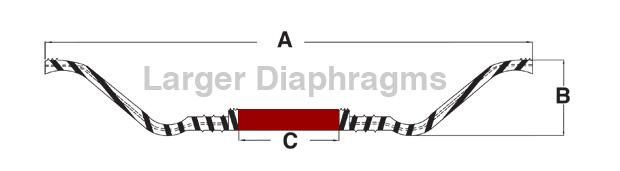
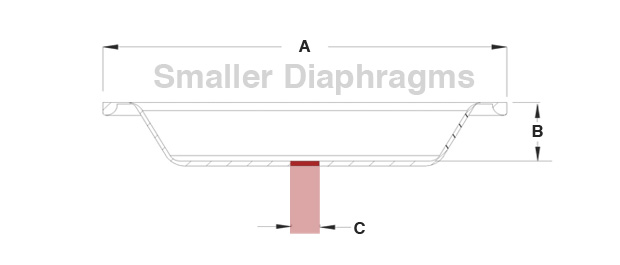
Step 2: Choose Your Size, Material and Part #
TPE/Santoprene Diaphragms, Larger Pump Sizes
| A | B | C |
|---|---|---|
| 13" | 1-3/4" | 4 7/8" |
| 14 3/4" | 2-1/2" | 5 1/2" |
Neoprene Diaphragms, Larger Pump Sizes
| A | B | C |
|---|---|---|
| 10-1/2" | 1-1/2" | 2-3/4" |
| 11-1/4" | 1-1/2" | 3-3/4" |
| 13" | 1-3/4" | 4-7/8" |
| 14-3/4" | 2-1/2" | 5-1/2" |
Neoprene Diaphragms, Smaller Pump Sizes
| A | B | C |
|---|---|---|
| 5" | 1-1/2" | 0.5" |
| 5.5" | 1-1/2" | 0.5" |
| 6" | 1-1/2" | 0.5" |
| 6.5" | 1-1/2" | 0.5" |
| 7" | 1-1/2" | 0.5" |
| 8" | 1-1/2" | 0.5" |
Industries and Applications
Replacement diaphragms from Ken’s Distributing are used across a wide range of industries and job types. The following are the most common applications we supply parts for.
Construction dewatering: Removing groundwater and surface water from excavations, foundations, and trenches.
Concrete cutting and grinding: Pumping slurry, cooling water, and cutting fluid waste generated during diamond blade cutting and surface grinding operations.
Municipal bypass and utility maintenance: Supporting sewer bypass, water main work, and stormwater management.
Industrial fluid transfer: Moving process water, wash water, and non-aggressive chemical solutions in plant and facility environments.
Mining and aggregate: Handling abrasive slurry and pit dewatering where diaphragm durability under abrasive wear matters.
Agricultural and irrigation: Transferring water in irrigation, fertigation, and agricultural drainage applications where rubber and neoprene diaphragms are most commonly used.
Rental fleets: Keeping rental pump inventory operational with fast-turnaround replacement diaphragm support for individual pump brands and models.
When to Replace Your Diaphragm Pump Diaphragm
Knowing when a diaphragm needs replacement helps prevent unplanned pump failure on the job. Replace your diaphragm when you notice any of the following.
- Fluid visible in the air chamber or air exhaust, which indicates a diaphragm tear or pinhole failure
- Reduced flow rate without a change in pump speed or suction conditions
- Irregular pump cycling or pumping that sounds labored under normal load
- Visible cracking, stiffening, or surface degradation on the diaphragm face
- A diaphragm that has been in service longer than the manufacturer’s recommended interval for the application type
Replacement intervals vary depending on material, operating hours, fluid type, and conditions. Rubber and neoprene diaphragms in continuous-duty, abrasive, or chemically active environments may require more frequent inspection than TPE/Santoprene in the same conditions.
Blanket Orders and Bulk Pricing for Replacement Diaphragms
Contractors, municipalities, rental companies, and industrial operations that run multiple diaphragm pumps benefit from having diaphragm inventory on hand before a failure occurs. Ken’s Distributing offers blanket order programs and bulk pricing tiers for organizations that need a reliable, year-round supply of replacement diaphragms.
Blanket orders allow you to lock in pricing, guarantee availability, and schedule fulfillment around your operational calendar rather than reacting to a pump failure in the field.
For bulk order pricing on Buna, neoprene, rubber, or TPE diaphragms, contact Ken’s Distributing directly with your pump brand, model, diaphragm size, and estimated annual volume.
Learn More About Blanket Orders
Frequently Asked Questions About Replacement Diaphragms
How do I know which diaphragm material is right for my pump?
Start with the fluid being pumped. For clean water and standard groundwater, rubber or neoprene are sufficient and cost-effective. For oily water, fuel-contaminated groundwater, or hydrocarbon-containing fluids, use Buna/nitrile. For demanding continuous-duty environments where service life is the priority, TPE/Santoprene is the best choice. If you are still unsure, contact Ken’s Distributing with your pump model and application details.
Are these diaphragms OEM parts or aftermarket?
Ken’s Distributing supplies both OEM and high-quality aftermarket replacement diaphragms depending on the brand and model. Contact us with your part number or pump model to confirm which option is available for your pump.
How do I find the right diaphragm for my specific pump model?
You can browse by pump brand using the brand links above, browse by size, or contact Ken’s Distributing with your pump model number. Our team can identify the correct diaphragm based on your pump brand, model, and material requirements.
Do you ship replacement diaphragms to Canada?
Yes. Ken’s Distributing ships replacement diaphragms to all 50 U.S. states and Canada. Contact us for shipping details on large or bulk orders.
What is the difference between a 2 inch, 3 inch, and 4 inch diaphragm pump diaphragm?
The size refers to the pump’s discharge port diameter, which corresponds to the diaphragm diameter required. A 2 inch pump uses a smaller diaphragm than a 3 inch or 4 inch pump. Always confirm the diaphragm size against your specific pump model rather than assuming the port size alone determines the diaphragm dimensions.
Can I use a different material diaphragm than what originally came with my pump?
In many cases, multiple diaphragm materials may be available for a particular pump application. The replacement diaphragm must meet the required dimensions and application requirements for your pump. Contact Ken’s Distributing with your pump model, current diaphragm details, and operating conditions if you need help selecting the appropriate material.
What causes diaphragm pump diaphragms to fail prematurely?
The most common causes of early diaphragm failure include using the wrong material for the fluid being pumped, running the pump dry for extended periods, operating above the pump’s rated pressure, and infrequent inspection that allows a damaged diaphragm to continue flexing past the point of safe use. Choosing the correct material for the application and inspecting diaphragms regularly are the most effective ways to extend service life.