
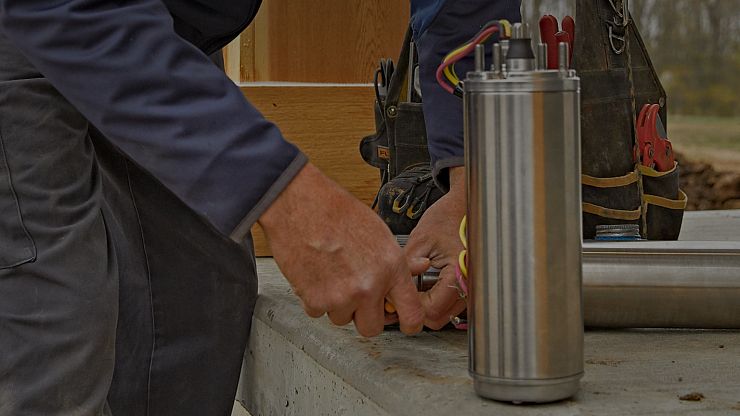
A well pump is the mechanical device that draws water from an underground aquifer and delivers it to a house, farm, or cabin.
Jet pumps are one primary category, and they mount on the surface near the well or inside a basement, using suction to pull water up.
Submersible pumps are the other primary category, and they hang inside the well casing below the water line and push water up the drop pipe.
Around 15 percent of the U.S. population, more than 43 million people, rely on private wells for drinking water, according to the EPA.
Picking the right well pump starts with three numbers: how deep the well is, how many gallons per minute the property needs, and how corrosive the water source is.
Types of Well Pump Systems
Four system types cover most residential setups: shallow well jet pumps, convertible jet pumps, submersible pumps, and hand or utility water pump options.
Groundwater feeds all four, and its share of the planet’s fresh water gets quoted two different ways.
USGS puts groundwater at roughly 30 percent of all fresh water on Earth, while groundwater associations commonly cite 98 to 99 percent.
Both are correct: the lower figure counts polar ice and glaciers, the higher one counts only the liquid fresh water people can reach, and ice caps do not feed a well casing.
Jet Pumps and Shallow Well Jet Pumps
A shallow well jet pump is a surface-mounted pump that uses suction to draw water from a well no deeper than about 25 feet below the pump itself.
These pumps suit properties with a high water table, such as homes near lakes and cabins in river valleys where groundwater sits close to the surface.
Atmospheric pressure can push water up a suction line only about 33 feet at sea level, and pipe friction cuts the practical limit to roughly 25 feet.
Surface mounting gives the shallow well jet pump a real service advantage.
The motor, impeller, pressure switch, and wiring sit in the open, so a technician can diagnose pump issues without pulling anything from the well, which keeps jet pumps cost effective to own.
This guide to how a shallow well jet pump works covers the suction math.
Convertible Jet Pumps for Deeper Wells
A convertible jet pump is a single unit that can be set up for either a shallow well or a deeper well by changing where the ejector sits.
In shallow configuration, the ejector bolts to the front of the pump and draws from about 25 feet on a single pipe.
In deep configuration, the ejector drops into the well on a two-pipe assembly, and the pump can draw water from up to about 90 feet depending on the model.
Convertible jet pumps suit properties where the water table rises and falls between wet and dry seasons.
Submersible Well Pump and Submersible Pumps
A submersible well pump sits underwater inside the well casing and pushes water upward instead of pulling it.
Pushing removes the suction limit entirely, which is why submersible pumps dominate deep wells.
Residential 4-inch models commonly serve wells from 100 feet to more than 500 feet, and the motor stays cool because it runs surrounded by water.
Flow capacity is the second advantage, and a typical residential submersible produces 12 to 22 gallons per minute, enough to run a shower, a dishwasher, and an outdoor spigot at once.
Submersible pumps also operate quietly, since the casing and groundwater absorb the sound.
The tradeoff is access, since any repair means pulling the pump and drop pipe to the surface.
Hand And Utility Water Pump Options
Hand pumps are one of the oldest types of well pumps, and they still earn a place as a backup during power outages.
A hand pump needs no electricity, so it keeps water flowing when the grid drops.
A utility water pump covers the jobs a well system should not be asked to do.
Irrigation, draining a flooded basement, and transferring water between tanks belong to a utility or transfer pump, which keeps the well system dedicated to household water supply.
What to Look For in a Water Pump
Five features separate a pump that lasts from one that fails early: construction materials, pressure control, motor horsepower, flow rate, and serviceability.
Materials: Stainless Steel and Corrosion Resistance
Stainless steel resists corrosion, pitting, and scale better than plain cast iron, which matters most for a submersible unit that lives underwater for a decade.
A stainless steel pump shell also handles sand and grit without thinning, so efficiency holds longer.
Nonferrous materials are the better call in aggressive water.
Thermoplastic, bronze, and engineered polymer components outperform steel in water with high chloride, low pH, or heavy iron content.
Pressure Controls: Constant Pressure Systems
Constant pressure systems hold household water pressure at one steady setting no matter how many fixtures are open at once.
Add a pressure tank to any conventional well system, because it stores water, holds pressure steady when a faucet opens, and stops the motor cycling every few seconds.
Size that tank to the pump’s cycle rate, since a tank that is too small forces short cycling and burns out the motor.
Standard pressure switches cut in between 30 and 40 PSI and cut out between 50 and 60 PSI, the 30/50 or 40/60 setting on most factory switches.
Add a variable-frequency drive when the household wants true constant pressure, when the well feeds multiple bathrooms or an irrigation zone, or to spend less energy per gallon.
A drive slows the motor instead of stopping it, which trims the start-stop surges that shorten pump life.
Motor, Flow, and Depth: Match to Deeper Wells or Shallow Wells
Match motor horsepower to the flow rate the property needs, measured in gallons per minute at the pressure the fixtures require.
A three-bathroom home usually needs 8 to 12 GPM, while a small cabin is satisfied at 5 GPM, and an oversized motor pulls the well down faster than it recovers.
Static water level, not total well depth, drives pump selection.
Static water level is the distance from the ground to the top of the water when the pump is off, and it sets how far the pump has to lift.
Add pipe friction losses and target service pressure to get total dynamic head, the figure a pump curve is read against.
Installation and Serviceability
Reliability and accessibility decide what a pump costs over the next ten years.
A surface jet pump can be serviced in place, while a submersible pump has to be pulled, which means a truck, a hoist, and two people.
A complete installation kit generally covers these parts:
- Drop pipe or poly pipe rated for the well depth
- Submersible cable and a waterproof splice kit
- Torque arrestor and a stainless safety rope
- Pitless adapter, plus a well seal or cap
- Check valve, with a second one at depth on long drops
- Pressure tank, tank cross or tee, and pressure relief valve
- Pressure switch and gauge, plus a control box on 3-wire motors
How to Choose the Right Well Pump
Start with well depth, because depth eliminates most of the catalog.
| Well condition | Pump type | Typical reach |
|---|---|---|
| Water within 25 feet | Shallow well jet pump | Up to 25 feet |
| Water 25 to 90 feet | Convertible jet pump | Up to about 90 feet |
| Water beyond 90 feet | Submersible well pump | 100 to 500 plus feet |
Size by gallons per minute next, adding up the fixtures likely to run together.
Check the well yield too, since a pump cannot deliver more water than the well produces.
Choose stainless steel for corrosive water, iron-heavy water, or any deep submersible install where pulling the pump early would cost more than the upgrade.
Test the water before you buy, because a USGS study cited by the EPA found one in five wells contained a contaminant above a human-health benchmark.
The EPA private well guidance explains what to test for and how often.
Swapping a surface jet pump is within reach of a confident homeowner, while setting a submersible at 300 feet involves heavy pipe, high-voltage wiring, and state well code.
Choose constant pressure when the household wants steady water supply at every fixture, especially where someone showers while laundry runs.
Watching for early signs a well pump is failing gives you time to plan a replacement.
Frequently Asked Questions
Which Is Right: Jet Pump Or Submersible Pump?
The right choice between a jet pump and a submersible pump depends mostly on well depth.
Jet pumps work when water sits within about 25 feet, or within roughly 90 feet using a convertible jet pump with a deep ejector.
Submersible pumps handle anything deeper and deliver 12 to 22 gallons per minute, which suits households running several fixtures at once.
The rule of thumb: shallow wells favor jet pumps for easier service and lower cost, while deep wells favor submersible pumps for dependable performance.
Can I Add Constant Pressure To My Well System?
Yes, you can add constant pressure to most existing well systems without replacing the pump.
Constant pressure integrates through a variable-frequency drive that varies motor speed to match demand, paired with a smaller pressure tank and a sensor.
The drive holds one pressure as taps open and close, instead of swinging between the 40 and 60 PSI switch points.
Expect a higher upfront cost than a standard switch and tank, offset by steadier pressure, fewer motor starts, and less energy per gallon.
Are Stainless Steel Pumps Worth The Extra Cost?
Stainless steel pumps are usually worth the extra cost in submersible and corrosive-water applications.
Stainless resists corrosion, pitting, and abrasion from sand, so internal surfaces stay smooth and efficiency holds far longer.
That corrosion resistance translates into longevity, which matters most when the pump sits 200 feet down and replacement means pulling the whole drop pipe.
The tradeoff is purchase price, so in clean water on a shallow, easy-to-reach install, cast iron can still save money.
Can I Install Submersible Pumps Myself?
You can install submersible pumps yourself if you have the right tools and real electrical knowledge.
The job needs a pipe hoist or helper, pipe wrenches, a torque arrestor, a waterproof splice kit, a megohmmeter for motor insulation, and comfort with 230V wiring.
Hire a licensed well contractor when the well runs deeper than about 150 feet, when casing condition is unknown, or when local code requires a permit.
A dropped pump is expensive to fish out, and that is where most DIY installs fail.
How Do I Size A Pump For My Well?
Sizing a pump for your well requires three measurements before you look at any model.
First, well depth and casing diameter, taken from the well log or the driller’s report.
Second, static water level, the distance from the ground to the water surface when the pump is off, since this sets the lift.
Third, household demand in gallons per minute, added from the fixtures likely to run together.
Combine those factors into total dynamic head, then read that figure and your GPM target against the pump curve.
Explore Pumps, Kits, And Accessories
Browse 4-inch submersible well pumps to compare 12 and 22 GPM models from 1/2 HP through 1-1/2 HP, with stainless steel shells and 2-wire or 3-wire motors.
For shallower setups, compare shallow well jet pumps in cast iron and stainless steel.
Step up to convertible jet pumps if the water table moves.
Households chasing steady pressure should start with multi-stage pressure pumps and packages built for constant pressure and boosting.
This submersible pump maintenance guide covers the checks that keep one running.
Still unsure which pump suits your well?
Call the knowledgeable staff at (303) 699-7845, 8am to 4:30pm MST, or send your well depth, static water level, and GPM target through the contact page for a sizing recommendation.
Most orders ship the same day to all 50 states and Canada.