
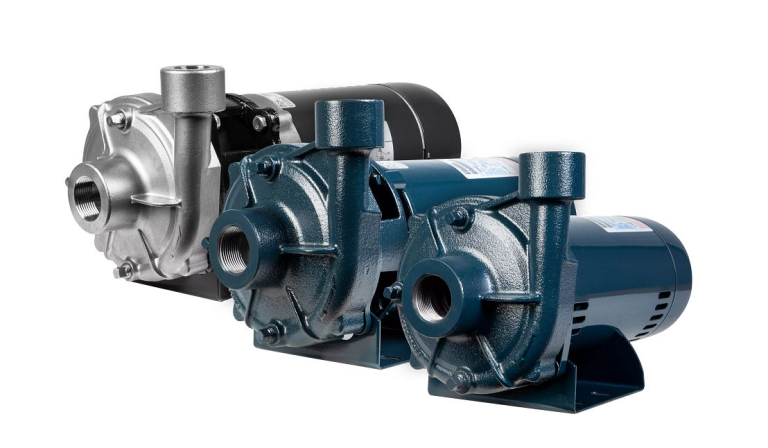
A puddle under a pump is almost never the casing. It is a part the size of a wristwatch that most owners have never heard of.
The mechanical seal is one of the two pump components that decides how long a centrifugal pump lasts, and it is the one that fails first.
What Is a Pump Mechanical Seal?
A pump mechanical seal is the pair of flat faces that stops liquid escaping along the rotating shaft. One face turns with the shaft, the other stays fixed in the housing, and springs hold them together while a film of the pumped liquid lubricates the joint.
Key Takeaways
- The seal, not the casing, is where a pump usually leaks.
- A liquid film microns thick both lubricates and seals the faces.
- Running dry destroys a seal in seconds, not months.
- Face materials must match the liquid being pumped.
- Replace the seal any time the pump is opened.
Why Seals Fail
| Cause | What you see | Fix |
|---|---|---|
| Dry running | Sudden leak after losing prime | New seal, solve the prime loss |
| Abrasives | Gradual weep, scored faces | Harder faces, filter the source |
| Chemical attack | Swollen or cracked elastomer | Correct elastomer grade |
| Misalignment | Uneven wear, vibration | Check shaft and bearings |
| Heat | Blistered carbon face | Verify cooling and flow |
Dry running is the one that catches people out. A pump that loses prime, keeps spinning and gets restarted an hour later has usually already ruined its seal, even though nothing sounded wrong at the time.
Face Materials Matter
Carbon against ceramic is the standard combination for clean water and it is inexpensive, but abrasives cut it apart. Silicon carbide against silicon carbide costs more and survives grit, which is why well water carrying sand justifies the upgrade.
The elastomer is the second half of the choice. Buna handles water and works out cheapest, while Viton is what you specify for chemicals and higher temperatures. Ordering a seal on face material alone leaves half the decision unmade, and the underlying mechanics are set out in this reference on the end face mechanical seal.
Leak or Worn Impeller?
These are the two failures on a centrifugal pump and they look nothing alike. A seal announces itself with water where there should be none. A worn impeller leaves the pump dry and quiet while the pressure slowly falls away, which is covered in our guide to the pump impeller.
If pressure is dropping and there is no leak, the impeller is the suspect. If there is a drip near the motor end, replace the seal. Where neither fits, run through the checks in telling whether a well pump is bad.
Fitting a New Seal Without Ruining It
- Handle faces by the edge. Skin oil on a lapped face makes it leak.
- Keep everything clean. One grit particle scores both faces.
- Lubricate the elastomer with water or glycerin, never petroleum grease.
- Press the stationary half square. Cocked seats crack.
- Never start dry. Fill the casing before the first run.
Order the seal kit by pump model and serial rather than by measuring the old one. Shaft diameters repeat across ranges while spring lengths and seat depths do not, so a seal that slides on can still sit at the wrong load.
Seals and Preventive Maintenance
Any time a pump is open for another reason, the seal goes back new. The labor is already spent, the part is a fraction of the visit, and a used seal disturbed once rarely reseats cleanly.
Short cycling shortens seal life for the same reason it shortens everything else, since every start is a dry moment before the film reforms. That traces back to the pressure tank, as covered in our pressure switch and tank guide, and the wider schedule is in why water pumps need servicing.
Frequently Asked Questions
How do mechanical seals work in pumps?
Mechanical seals work by pressing two lapped faces together so tightly that only a film a few microns thick passes between them. That film lubricates and cools the faces while blocking any meaningful leak. Run the pump dry and the film disappears, the faces overheat within seconds, and the seal is finished.
What is the most common cause of mechanical seal failure?
The most common cause of mechanical seal failure is dry running, because the seal depends on the pumped liquid to lubricate and cool its faces. A pump that loses prime and keeps spinning has usually ruined its seal already. Abrasives, chemical attack on the elastomer and misalignment account for most of the rest.
How to tell if a mechanical seal is bad?
You tell a mechanical seal is bad by water appearing where there should be none, typically a drip or weep near the motor end of the pump. It may only show under pressure at first. A seal problem leaks; a worn impeller does not, so a dry pump losing pressure is a different fault.
Can you replace just the seal on a water pump?
You can replace just the seal on a water pump, and it is the normal repair rather than replacing the whole unit. The pump has to come apart to reach it, so most of the cost is labor. Fit a new seal any time the pump is opened for another reason.
What is the lifespan of a mechanical seal?
A mechanical seal lasts years in clean water and correct service, but its life is set by conditions rather than by a calendar. Sand shortens it, heat shortens it, and a single dry start can end it immediately. Seals in gritty well water justify harder faces such as silicon carbide.
Seal Kits at Ken’s Distributing
Ken’s Distributing stocks seal kits, seats and elastomers across the Franklin Electric range and the Monarch water pump range, in carbon, ceramic and silicon carbide face combinations.
Send the pump model and serial number with a note on what the pump handles, and we will match both the faces and the elastomer to the liquid rather than to the shaft size alone.