
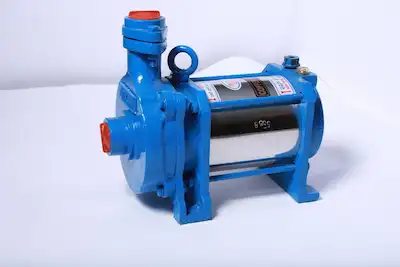
An irrigation well pump that fails in July does not fail in July. It fails over the eighteen months before that, through worn seals, a waterlogged pressure tank and a motor drawing more current every season while nobody watches the meter.
Well pump maintenance is mostly about catching those changes early. The work below takes an hour or two a season and routinely doubles the service life of a pump that would otherwise be replaced on a hot day at short notice.
How Often Should a Well Pump Be Serviced?
A well pump should be inspected quarterly and serviced once a year, before the irrigation season rather than during it. Most pumps last 8 to 15 years, and the gap between the bottom and top of that range is almost entirely maintenance. The three checks that matter most are pressure tank air charge, seal condition and whether the pump has ever run dry.
Key Takeaways
- Inspect quarterly, service annually, and do it before peak season rather than during a failure.
- Short cycling is usually a waterlogged pressure tank, not a failing pump. Check the tank before replacing anything.
- Running dry destroys a pump within minutes. A low water cutoff switch costs a fraction of a replacement.
- Record flow and pressure each season. One reading means nothing; three seasons show exactly when decline started.
- Drain and insulate before the first freeze. Cracked housings are the most common winter failure.
Well Pump Service Intervals at a Glance
| Task | How often | Why it matters |
|---|---|---|
| Visual inspection for leaks, corrosion, new noise | Quarterly | New sounds precede bearing failure by months |
| Pressure tank air charge check | Twice a year | Waterlogging causes short cycling and motor wear |
| Flow and pressure reading, logged | Start of each season | Trend data shows decline before failure |
| Intake screen and strainer clean | Start and end of season | Sediment abrades the impeller continuously |
| Electrical connections and switch contacts | Annually | Wet ground corrodes terminals and causes arcing |
| Drain and winterize | Before first freeze | Trapped water cracks the housing |
What Should You Inspect on a Well Pump?
Walk the installation quarterly and look for what has changed rather than what is broken.
Rust streaks below a fitting mean a slow leak that has been running for weeks. Damp ground around a wellhead means the same thing underground.
Listen before you look. A new grinding or knocking sound is almost always the first symptom of bearing wear, and it arrives months before the motor fails outright.
Keep the Intake and Screen Clear
Sediment is the quiet killer on irrigation systems. Sand and silt drawn through a pump abrade the impeller continuously, and a pump moving grit loses efficiency long before it loses function.
Clear debris from around the wellhead and check any foot valve or intake screen for buildup. On surface installations, clean the strainer at the start and end of each irrigation season.
If the water has visibly turned sandy, stop and diagnose it. A well drawing sand is a well problem, and running the pump harder makes both worse.
Never Let the Pump Run Dry
Running dry destroys a pump faster than any other single cause. Without water moving through it, the seals overheat within minutes and the motor follows.
On irrigation systems this usually happens when demand outruns the well’s recovery rate during a long watering cycle, not because the well is empty.
A low water cutoff switch or a water level sensor costs a fraction of a pump and prevents the failure entirely. On any well that has run low even once, treat it as required rather than optional.
Check the Pressure Tank and Switch
Short cycling, where the pump starts and stops rapidly, is the most commonly misdiagnosed fault on a well system. The pump usually gets blamed and replaced when the pressure tank is at fault.
A waterlogged tank has lost its air charge, so it no longer buffers demand and the pump switches on for every small draw. Each of those starts wears the motor and the switch contacts.
Check the tank’s air pressure against the manufacturer’s specification, and set the cut-in and cut-out points to the figures in the manual rather than by feel.
Inspect Electrical Connections
Wellhead wiring lives outdoors in wet ground, which is a hard environment for a connection.
Look for fraying, corrosion at terminals and any discoloration around the pressure switch contacts, which indicates arcing. Replace damaged wiring rather than taping it.
A rising power draw on an otherwise unchanged system is worth investigating. It usually means the pump is working harder than it should, through wear, a partial blockage or a failing capacitor.
Test Performance Rather Than Assuming It
Measure flow rate and pressure at the start of each season and write the numbers down. A single reading tells you nothing, but three seasons of readings tell you exactly when the pump began to decline.
A drop in flow with unchanged pressure points at a worn impeller. A drop in both usually points at the well or the intake rather than the pump itself. The full list of warning signs a pump is failing sets out which symptom means what.
Where the symptom is unclear, our guide to diagnosing common pump faults works through them one at a time.
Winterize Before the First Freeze
Water expands when it freezes, and a pump housing with water trapped in it will crack.
Drain above-ground pumps and exposed pipework at the end of the irrigation season. There are real benefits to submersible pumps here, since a pump below the frost line never needs winterizing. Insulate the wellhead and any pipe run above the frost line, and disconnect and drain hoses.
Submersible pumps sit below the frost line and are generally safe, but the pressure tank and pipework inside an unheated building are not. The service routine for the pump itself is different again, and it is set out in our guide to submersible maintenance.
Replace Wear Parts Before They Fail
Seals, impellers, pressure switches and capacitors are consumables on a pump that runs a full irrigation season each year.
Replacing a worn seal is a routine job. Replacing the motor it destroyed is not, and the parts are stocked while the downtime in peak season is not recoverable.
For wells running a jet or submersible setup, our Red Lion well pump range covers both configurations along with the parts that service them.
Private wells are not regulated by the federal government, and the EPA places responsibility for safe drinking water on the well owner. Nobody else is going to schedule this work for you.
When Should You Call a Professional?
Some work is straightforward and some is not worth attempting.
Cleaning a strainer, checking tank pressure and inspecting wiring are all owner-level tasks. Pulling a submersible, diagnosing a well that has stopped recovering, or anything involving the electrical supply itself is not.
A pump that has been running dry, overheating or drawing sand needs diagnosis before it is restarted. Turning it back on to see what happens is how a repairable pump becomes a replacement.
If the pump is genuinely at end of life, sizing the replacement properly matters more than matching the old model. We cover that in choosing an irrigation well pump.
Frequently Asked Questions
What is the typical lifespan of a well pump?
The typical lifespan of a well pump is 8 to 15 years, and where a given pump falls in that range depends mostly on water quality and how often it cycles. Submersibles generally outlast jet pumps because they run cooler underwater. Sandy water, frequent short cycling and running dry all shorten it substantially. A well maintained pump on clean water regularly passes 15 years.
What are the common problems with well water pumps?
Common problems with well water pumps are short cycling, loss of pressure, the pump failing to start and running dry. Short cycling usually traces to a waterlogged pressure tank rather than the pump. Loss of pressure points at a worn impeller, a leak or a clogged intake. A pump that will not start is often a failed capacitor or pressure switch rather than a dead motor.
How often should a well pump be serviced?
A well pump should be inspected quarterly and serviced properly once a year, ideally before the irrigation season rather than during it. Quarterly checks cover leaks, unusual noise and pressure tank air charge. The annual service covers flow and pressure readings, electrical connections and wear part condition. Wells with sandy water or heavy seasonal demand benefit from twice yearly servicing.
How do I know if my well pump is failing?
You can tell a well pump is failing from falling water pressure, air spitting from taps, the pump running constantly or cycling on and off rapidly, and a rising electricity bill with no change in usage. New grinding or knocking noises indicate bearing wear. Sediment appearing in previously clean water is a warning sign that needs diagnosis before the pump is run again.
Parts and Replacement Pumps
Most pumps arrive at replacement because a cheap part was left too long rather than because the pump reached the end of its life.
We stock seals, impellers, pressure switches and complete pumps for the common well configurations. If you are diagnosing a fault, tell us the symptom and the model number stamped on the housing and we will work out which part you need before you buy anything.