
Every flooded trench, silted pond and rained-out foundation eventually needs the same thing: a pump that will move water full of whatever the site happens to contain, without stopping every ten minutes.
That is a trash pump. The name causes confusion, so it is worth clearing up first, because it does not mean what most people assume.
What Is a Trash Pump?
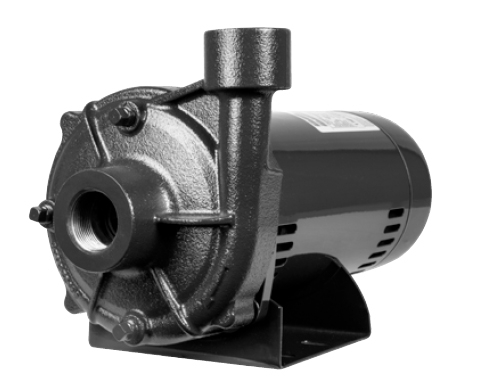
A trash pump is a self-priming centrifugal pump built with wide internal clearances and a removable cover plate, so debris passes through instead of jamming it. Trash means solid debris in water, not sewage. Leaves, twigs, gravel and mud go through. Human waste does not belong in one.
Key Takeaways
- Trash refers to debris, never to sewage.
- Semi trash handles smaller solids and costs less.
- Genuine mud is diaphragm pump work, not centrifugal.
- The cover plate comes off by hand to clear a blockage on site.
- Match solids size to the pump before matching flow.
Trash, Semi Trash or Diaphragm?
| Semi trash | Full trash | Diaphragm | |
|---|---|---|---|
| Solids handled | Small, around 5/8 in | Up to an inch or more | Thick mud and slurry |
| Flow rate | High | High | Low but relentless |
| Can run dry | No | No | Yes |
| Best for | Ponds, basements, sandy water | Site water with debris | Sludge pits, thick mud |
| Clearing a jam | Cover plate | Cover plate | Valve access |
The third row is the one that decides difficult jobs. A centrifugal trash pump needs a continuous column of liquid, so a trench that keeps running dry between surges will have someone re-priming it all afternoon. A diaphragm pump simply keeps stroking, which is why they dominate the messiest dewatering work.
Sizing One for the Job
Size on solids first, then flow. A pump that moves plenty of water but cannot pass what is in it will spend the day blocked, and no amount of extra capacity fixes that.
- Identify the largest solid realistically going through it, then pick the pump rated above that.
- Measure suction lift. The 25 foot ceiling applies here as it does to any surface pump.
- Keep the suction hose short and rigid. Collapsed hose starves the pump.
- Fit a strainer at the inlet, since the pump passes debris but not rocks.
- Prime it before every start. Self-priming means it clears its own line, not that it starts dry.
Suction lift is the constraint people forget, and the physics behind it is the same one covered in our guide to how far a surface pump can draw. Background on site water removal generally is set out in this overview of dewatering.
What a Trash Pump Is Not For
Sewage is the big one. A trash pump has no cutting mechanism and no sealed, vented basin, so it neither macerates solids nor contains odor. Below-grade waste needs a grinder pump or a sewage ejector depending on the run.
Chemicals are the other. The seals and impeller in a standard trash pump are chosen for water with grit in it, not for solvents or acids, and the wrong elastomer fails fast.
Keeping One Working
Wear is inevitable in a pump designed to swallow abrasives. The impeller and the wear plate take the damage, and both are replaceable, which is the point of the design.
Check clearances when output starts falling rather than waiting for a failure, and clear the strainer daily on a dirty site. Where the work is genuinely thick, the wear pattern and part life of a diaphragm unit are covered in our guide to how long a diaphragm pump lasts, and model comparisons in our CH&E pump guide.
Frequently Asked Questions
What is a trash pump?
A trash pump is a self-priming centrifugal pump built with wide internal clearances and a removable cover plate so it can pass debris that would jam an ordinary pump. Leaves, twigs, gravel and mud go through rather than blocking it. The name refers to solid debris in water, not to sewage, which needs a different pump entirely.
How does a trash pump work?
A trash pump works like any centrifugal pump, with an impeller throwing water outward into the casing, but the gaps inside are deliberately large. Those clearances let solids pass instead of wedging against the impeller. The cover plate comes off by hand so anything that does lodge can be cleared on site without tools.
What is a semi trash pump?
A semi trash pump handles smaller solids than a full trash pump, typically up to around five eighths of an inch, and is built lighter and cheaper as a result. It suits pond drainage, flooded basements and site water carrying sand or grit. Water thick with mud or larger debris needs a full trash pump instead.
Will a trash pump pump mud?
A trash pump handles muddy water but struggles with genuine mud, because a centrifugal pump needs enough liquid to keep moving. Thick slurry is diaphragm pump work: a diaphragm unit displaces a fixed volume each stroke and keeps pumping where a centrifugal loses its grip, and it can run dry without damage.
Trash Pumps at Ken’s Distributing
Ken’s Distributing stocks trash and semi trash pumps across aluminum and cast iron builds, including the Red Lion semi trash pump, the CH&E and Generac Magnum range for diaphragm dewatering, and AMT engine driven pumps.
Tell us the largest solid in the water, the flow you need and the lift, and we will point you at the right class of pump rather than the biggest one.
Dewatering is one job among many, and the full picture is in our guide to choosing across the Franklin catalog.