
Wacker Neuson PG Series Dewatering Pump, Self-Priming, Submersible, 3.5 HP
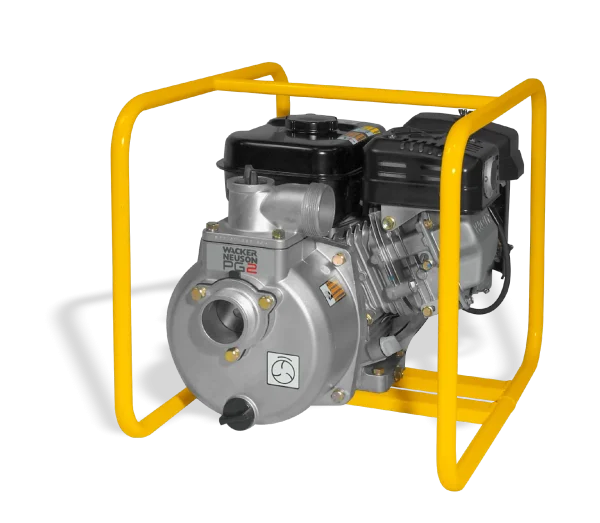
Wacker Neuson PG Series Dewatering Pump for High-Flow Temporary Water Removal
The Wacker Neuson PG Series dewatering pump is a self-priming, gasoline-engine driven centrifugal pump built for fast and efficient temporary water removal on construction sites, civil engineering projects, and emergency drainage applications. Available through Ken’s Distributing Company, the PG Series is offered in two models: the PG2A with a maximum flow rate of 188.8 gallons per minute and the PG3A delivering up to 264.2 gallons per minute. Both models are powered by Honda gasoline engines and operate independently of electrical power, making them practical for remote sites and locations where power access is limited or unavailable. With delivery heights reaching up to 98.4 feet on the PG3A, the PG Series covers a wide range of site dewatering requirements from compact temporary drainage to high-volume continuous pumping operations.
The PG Series is designed with the working contractor in mind. Both models use a lightweight die cast aluminum housing, cast iron wear components, and a protective frame with carrying handles that make the pump easy to move, position, and put to work without additional equipment or setup complexity.
Key Features of the Wacker Neuson PG Series Dewatering Pump
Self-Priming Centrifugal Pumping Action
Both the PG2A and PG3A are self-priming centrifugal pumps, meaning they can draw water up from the source without requiring manual filling of the pump chamber at each startup. Once the pump has been initially primed, it retains enough water in the housing to re-prime automatically on subsequent starts, provided the suction hose and housing remain intact. This capability significantly reduces startup time on active sites and allows operators to shut the pump down and restart it quickly in response to changing site conditions.
Pump-Out Vanes on the Back of the Impeller
The PG Series impeller incorporates pump-out vanes on its rear face that actively work to prevent debris and solid particles from accumulating in the space behind the impeller. This reduces the risk of blockage and seal wear caused by abrasive material migrating into the mechanical seal area. The result is greater operational continuity, reduced maintenance intervals, and longer seal service life under the dirty water conditions common to active construction sites.
Cast Iron Impeller and Volute
The impeller and volute of both PG Series models are manufactured from cast iron, chosen for its combination of wear resistance and durability in pump components that are in continuous contact with moving water and suspended particles. Cast iron wear components in this application outlast plastic or aluminum alternatives significantly, reducing the frequency of impeller and volute replacement and contributing to the overall long service life of the pump.
Carbon Ceramic Mechanical Seal
The PG Series uses a carbon ceramic mechanical seal that provides reliable protection against water ingress into the engine and drive components throughout the operating life of the pump. The carbon ceramic face pairing is a well-established combination in pump engineering, offering good chemical resistance and wear characteristics suited to the varied water chemistry encountered on construction and civil sites. The seal operates in conjunction with the low oil shutdown system of the Honda engine, which adds an additional layer of protection against engine damage if oil level drops below the safe operating threshold.
Lightweight Die Cast Aluminum Housing with Protective Frame
The pump body uses a high-strength die cast aluminum housing that keeps operating weight to 55.1 pounds on the PG2A and 68.3 pounds on the PG3A, both manageable for a single operator in most field conditions. A heavy-duty protective steel frame surrounds the pump assembly, providing convenient carrying handles on both sides and protecting the pump body from impact damage during transport and repositioning across rough terrain.
Honda Gasoline Engines with Low Oil Shutdown
The PG2A uses a Honda 118 cc single-cylinder engine rated at 3.5 horsepower, and the PG3A is powered by a larger Honda 163 cc engine rated at 4.8 horsepower. Both engines operate at 3,600 rpm and include a low oil shutdown system that automatically cuts engine power if oil pressure drops below the safe operating level, preventing the engine damage that results from running with insufficient lubrication. Fuel consumption is 0.3 gallons per hour on the PG2A and 0.5 gallons per hour on the PG3A, providing approximately 2 hours of continuous operation from each tank before refueling is required.
Technical Specifications: Wacker Neuson PG Series Dewatering Pump
Complete technical data for both PG Series models is provided below in metric and imperial units.
Metric Specifications
| Specification | PG2A | PG3A |
|---|---|---|
| Max Flow Rate | 630 l/min | 1,000 l/min |
| Max Solids Diameter | 6.5 mm | 6.5 mm |
| Max Suction Head | 7.6 m | 7.5 m |
| Max Delivery Height | 27 m | 30 m |
| Intake/Pressure Socket Dia. | 50 mm | 75 mm |
| Engine Type | Gasoline | Gasoline |
| Engine Manufacturer | Honda | Honda |
| Cylinders | 1 | 1 |
| Cylinder Capacity | 118 cm3 | 163 cm3 |
| Max Power Rating | 2.6 kW | 3.6 kW |
| Engine Speed at Max Power | 3,600 rpm | 3,600 rpm |
| Operating Engine Speed | 3,600 rpm | 3,600 rpm |
| Fuel | Gasoline | Gasoline |
| Fuel Consumption | 1.3 L/hr | 1.8 L/hr |
| Tank Capacity | 2.5 L | 3.6 L |
| Oil Filling Max. | 0.6 L | 0.6 L |
| Running Time at 100% | 1.9 hrs | 2.1 hrs |
| Power Standard | SAE J1349 | SAE J1349 |
| Operating Weight | 25 kg | 31 kg |
| Length | 490 mm | 515 mm |
| Width | 375 mm | 405 mm |
| Height | 395 mm | 460 mm |
Imperial Specifications
| Specification | PG2A | PG3A |
|---|---|---|
| Max Flow Rate | 188.8 gal/min | 264.2 gal/min |
| Max Solids Diameter | 0.3 in | 0.3 in |
| Max Suction Head | 24.9 ft | 24.6 ft |
| Max Delivery Height | 88.8 ft | 98.4 ft |
| Intake/Pressure Socket Dia. | 2 in | 3 in |
| Engine Type | Gasoline | Gasoline |
| Engine Manufacturer | Honda | Honda |
| Cylinders | 1 | 1 |
| Cylinder Capacity | 7.2 in3 | 9.9 in3 |
| Max Power Rating | 3.5 hp | 4.8 hp |
| Engine Speed at Max Power | 3,600 rpm | 3,600 rpm |
| Operating Engine Speed | 3,600 rpm | 3,600 rpm |
| Fuel | Gasoline | Gasoline |
| Fuel Consumption | 0.3 GPH | 0.5 GPH |
| Tank Capacity | 0.7 gal | 1 gal |
| Oil Filling Max. | 0.2 gal | 0.2 gal |
| Running Time at 100% | 1.9 hrs | 2.1 hrs |
| Power Standard | SAE J1349 | SAE J1349 |
| Operating Weight | 55.1 lb | 68.3 lb |
| Length | 18.9 in | 20.3 in |
| Width | 14.8 in | 15.0 in |
| Height | 15.6 in | 18.1 in |
PG Series Model Variants and Item Numbers
| Model | Item Number | Intake Size | Max Flow Rate | Max Delivery Height | Engine Power |
|---|---|---|---|---|---|
| PG2A | 5000007658 | 2 in (50 mm) | 188.8 gal/min (630 l/min) | 88.8 ft (27 m) | 3.5 hp Honda |
| PG3A | 5000007659 | 3 in (75 mm) | 264.2 gal/min (1,000 l/min) | 98.4 ft (30 m) | 4.8 hp Honda |
Applications: Where the Wacker Neuson PG Series Dewatering Pump Excels
The PG Series covers the full range of temporary water removal needs on construction and civil engineering sites. Its self-priming capability, gasoline independence, and high flow rates make it one of the most flexible dewatering pump options in the Wacker Neuson range.
- Construction Site Temporary Dewatering: Removing accumulated groundwater, rainwater, and surface runoff from excavations, foundation pits, and active building areas where water accumulation slows productivity and creates unsafe working conditions.
- Civil Engineering and Infrastructure Works: Controlling groundwater during road construction, bridge foundation work, culvert installation, and pipeline laying where dry working conditions are essential to construction quality and schedule.
- Flood Response and Emergency Drainage: Rapid deployment for removing large volumes of water from flooded structures, underpasses, and low-lying areas during and after storm events. The PG3A’s 264.2 gallon per minute output makes it particularly effective in high-volume emergency scenarios.
- Remote and Off-Grid Dewatering: Both PG Series models are fully gasoline-powered and independent of electrical infrastructure, making them practical for remote construction sites, rural projects, and locations where grid power or generator supply is unavailable or impractical to set up.
- Mining and Quarry Dewatering: Moving water from quarry sumps, open pit benches, and mining excavations where high delivery heights and consistent flow rates are required to maintain productive working conditions across the pit.
- Municipal Storm and Drainage Maintenance: Supporting storm drain clearing, culvert maintenance, and infrastructure drainage management where high flow rate and portability are needed to address multiple locations efficiently.
- Agricultural and Irrigation Applications: Water transfer, pond management, and drainage control on agricultural land where a portable, high-output gasoline pump provides flexibility across seasonal water management requirements.
Wacker Neuson PG Series vs. Submersible Pumps vs. Trash Pumps: Choosing the Right Pump
Understanding where the PG Series dewatering pump fits relative to electric submersible pumps and trash pumps is an important part of making the right equipment selection for your site conditions.
| Feature | PG Series (Dewatering) | PST Series (Submersible) | PT6 Trash Pump |
|---|---|---|---|
| Drive Type | Honda gasoline engine | Electric motor | Gasoline engine |
| Max Flow Rate | 264.2 gal/min (PG3A) | 69.8 gal/min (PSTS 750) | Refer to PT6 specs |
| Max Delivery Height | 98.4 ft (PG3A) | 62.3 ft (PSTS 750) | Refer to PT6 specs |
| Max Solids Diameter | 0.3 in | 0.75 in (PSTS 750) | Larger solids capacity |
| Power Independence | Yes, fully gasoline powered | No, requires electrical supply | Yes, fully gasoline powered |
| Self-Priming | Yes | Submersible operation | Yes |
| Best Application | High-flow clean water removal, no power access | Solids-tolerant dewatering with power access | High-solids, high-volume pumping |
Choose the PG Series when you need the highest possible flow rate, electrical power independence, and a relatively clean water application. If your water contains larger solids or if electrical power is available on site, the Wacker Neuson PST Series heavy-duty submersible pump provides greater solids tolerance with lower operating noise. For applications where large solids content requires a trash pump configuration, the Wacker Neuson PT6 self-priming trash pump or the Wacker Neuson PTS4 self-priming trash pump are designed specifically for that requirement.
How to Set Up and Operate the Wacker Neuson PG Series Dewatering Pump
The PG Series is designed for fast, straightforward deployment with minimal preparation. The steps below provide general operational guidance. Always consult the official Wacker Neuson operator’s manual and Honda engine manual before use.
- Pre-operation inspection: Check engine oil level using the dipstick and top up with the correct grade if required. Verify fuel level and fill the tank with fresh gasoline if needed. Inspect the pump housing, suction and discharge ports, and all hose fittings for damage or loose connections before starting.
- Position the pump: Place the PG Series pump on stable, level ground as close as practical to the water source, within the maximum suction head of 24.9 feet for the PG2A or 24.6 feet for the PG3A. Use the protective frame handles to carry and position the pump. The closer the pump is to the water surface, the faster and more reliably it will prime.
- Initial priming: On first use, or after the pump has been stored dry, pour clean water into the suction hose or pump chamber before starting. The PG Series is self-priming and will retain residual water in the housing for subsequent starts, but initial priming assists the pump in establishing flow quickly.
- Connect suction and discharge hoses: Attach the suction hose to the intake socket and lower the strainer end into the water. Connect the discharge hose to the outlet and route it to the designated discharge point. Ensure all connections are tight and the suction hose is free of air leaks that would prevent priming.
- Start the Honda engine: Set the choke to the cold start position if the engine is cold. Open the fuel valve, turn the ignition switch to the on position, and pull the recoil starter with a firm, steady motion. Once the engine starts, allow a brief warm-up period before moving to full operating throttle at 3,600 rpm.
- Confirm priming and flow: Water should appear at the discharge within the first 30 to 60 seconds of running at operating speed. If priming does not occur, shut the engine down, check the suction hose for air leaks, add additional priming water, and restart.
- Monitor during operation: Keep an eye on fuel level throughout the operating period. The PG2A provides approximately 1.9 hours of operation and the PG3A approximately 2.1 hours from a full tank at 100 percent load. The low oil shutdown system will cut engine power if oil pressure drops, providing protection against engine damage.
- Shutdown procedure: Reduce throttle before switching the engine off. Close the fuel valve after shutdown. If the pump is being stored for an extended period, drain the pump housing and flush with clean water to prevent sediment buildup and corrosion.
Safety Notice: This guidance is for general reference only. Always follow the complete instructions in the official Wacker Neuson operator’s manual and the Honda engine operation manual. Contact Kendisco for official documentation, spare parts, and technical support from Ken’s Distributing Company.
Frequently Asked Questions: Wacker Neuson PG Series Dewatering Pump
What is the Wacker Neuson PG Series dewatering pump used for?
The Wacker Neuson PG Series dewatering pump is used for temporary water removal on construction sites, civil engineering projects, mining operations, and emergency flood response. Its self-priming centrifugal design, Honda gasoline engine, and high flow rates make it one of the most capable portable dewatering pumps available for applications where electrical power is not accessible and high-volume water removal is required.
What is the difference between the PG2A and the PG3A?
The PG2A has a 2-inch intake, delivers up to 188.8 gallons per minute, and is powered by a 3.5 horsepower Honda engine. The PG3A has a 3-inch intake, delivers up to 264.2 gallons per minute, and uses a larger 4.8 horsepower Honda engine. The PG3A also achieves a higher maximum delivery height of 98.4 feet compared to 88.8 feet on the PG2A. Choose the PG3A for larger sites or higher-volume dewatering requirements, and the PG2A for more compact applications where a smaller, lighter pump is sufficient.
Is the PG Series self-priming?
Yes. Both PG Series models are self-priming centrifugal pumps. After the initial prime is established, the pump retains enough water in the housing to re-prime automatically on subsequent starts. Initial priming on first use or after extended storage is recommended by adding water to the suction hose or pump chamber before starting the engine.
What size solids can the PG Series handle?
Both the PG2A and PG3A can handle solids up to 0.3 inches (6.5 mm) in diameter. The PG Series is designed for relatively clean water with minimal solids content. For applications where water contains larger solids, debris, or heavy contamination, the Wacker Neuson PT6 self-priming trash pump or the Wacker Neuson PDT diaphragm pump are more appropriate choices.
Does the PG Series require electrical power?
No. Both PG Series models are powered entirely by Honda gasoline engines and require no electrical power supply. This makes them suitable for remote construction sites, rural locations, and emergency deployments where electrical infrastructure is unavailable.
How long can the PG Series run on a full tank of fuel?
The PG2A runs for approximately 1.9 hours from its 0.7-gallon tank at 100 percent load, consuming 0.3 gallons per hour. The PG3A runs for approximately 2.1 hours from its 1-gallon tank at 100 percent load, consuming 0.5 gallons per hour. Plan refueling intervals based on expected operating load and shift duration.
What is the difference between the PG Series and the PT6 trash pump?
The PG Series is a centrifugal dewatering pump optimized for high flow rate and delivery height with relatively clean water containing minimal solids up to 0.3 inches. The PT6 is a self-priming trash pump designed specifically to handle water with larger solids, debris, and more demanding contamination levels. If site water is relatively clean and high flow rate is the priority, the PG Series is the better choice. If solids content is significant, the PT6 is more appropriate.
Where can I purchase the Wacker Neuson PG Series dewatering pump?
The Wacker Neuson PG Series dewatering pump is available through Kendisco, operating as Ken’s Distributing Company, an authorized Wacker Neuson distributor. Contact Kendisco for current pricing, availability, and delivery options for both the PG2A and PG3A models.
Related Wacker Neuson Pumps Available at Kendisco
Ken’s Distributing Company supplies the complete range of Wacker Neuson water pumps. If you are evaluating other options for your dewatering project, the following products from the Wacker Neuson range may be relevant.
- Wacker Neuson PT6 self-priming trash pump for large-volume pumping with higher solids handling capacity
- Wacker Neuson PTS4 self-priming trash pump for medium-volume trash pumping applications
- Wacker Neuson PT2A and PT3A self-priming trash pumps for compact site dewatering with solids
- Wacker Neuson PST Series heavy-duty submersible pump for electric-powered solids-tolerant dewatering
- Wacker Neuson PDT diaphragm pump for mud, slurry, and large solids beyond the PG Series capability
Send us your model number and we will confirm fit, price, and availability.