
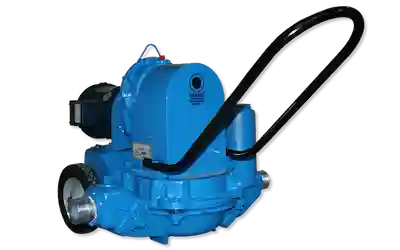
Generac Magnum Diaphragm Trash Water Pumps
- Moves the mud, sand, and sludge that clog impeller pumps
- Self-priming and runs dry without damage
- No impeller shaft or mechanical seal for sand and silt to wear out
- 2 and 3 inch models with gas, diesel, or electric power
- Skid mount or wheel mount on every model
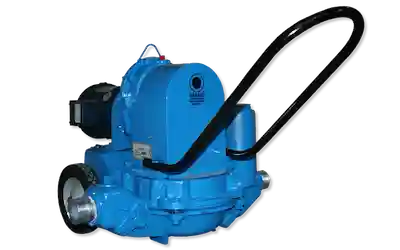
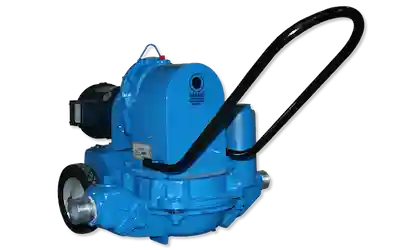
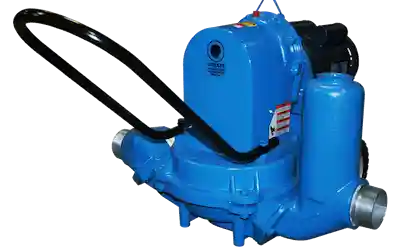
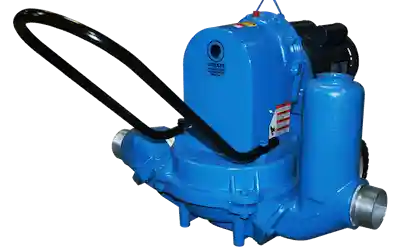
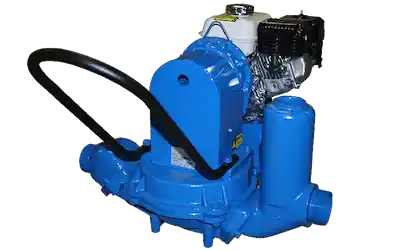
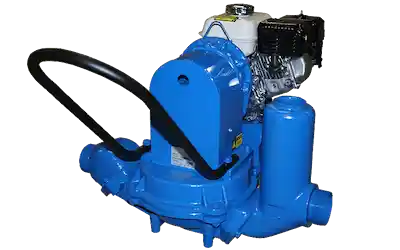
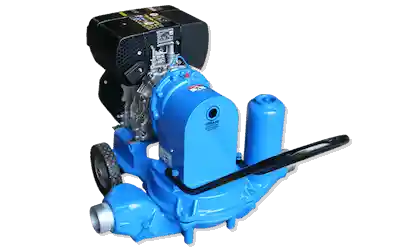
Generac Magnum diaphragm trash pumps for muddy, sandy water in ponds, trenches, ditches, and foundations. Choose 2 or 3 inch models with gas, diesel, or electric power, on a skid or wheel mount.
A diaphragm trash pump keeps moving the sludge, sand, and silt that would stop an impeller pump cold. Tired of a pump that clogs, loses its prime, or chews through seals the minute the water turns to mud?
This page compares the Generac Magnum MCP models we carry, explains how to read the model numbers, and helps you decide between gas, diesel, and electric power.
What Is a Diaphragm Trash Pump?
A diaphragm trash pump moves water with a flexing rubber diaphragm instead of a spinning impeller. It has no impeller shaft or mechanical seal for sand and silt to wear out. It primes itself, can run dry without damage, and starts pumping again when water collects, which makes it a strong fit for shallow, muddy dewatering.
CH&E Generac Magnum Water Pump Models
You may also hear these called Mud Hog pumps, a name Magnum has used on its diaphragm pump line. Every model below uses a heavy-duty cast aluminum pump with a standard TPE diaphragm. Here is how the eight models in this category compare, based on Generac's published specifications.
| Model | Port Size | Power |
|---|---|---|
| MCP5537 | 3 inch | Gas, Honda GX120 engine (4 hp) |
| MCP5538 | 3 inch | Gas, Honda GX160 engine (5.5 hp) |
| MCP5552 | 3 inch | Diesel, Hatz 1B20 engine (4.6 hp) |
| MCP5515-1 | 3 inch | Electric TEFC motor, single phase |
| MCP5515-3 | 3 inch | Electric TEFC motor, three phase |
| MCP5438 | 2 inch | Gas, Honda engine (see note below) |
| MCP5411-3 | 2 inch | Electric TEFC motor, three phase |
| MCP5437 | See note below | See note below |
A note on the MCP5437 and MCP5438: Generac's spec sheet lists the MCP5437 as a 2 inch gas pump, while its product page lists a 3 inch electric pump. The same sheet pairs the MCP5438 with an engine and horsepower rating that do not match each other. Call us with the serial number before you order parts or a replacement, and we will confirm which build you have.
Specs Shared Across the Range
- Passes round solids up to 1.7 inches across
- 25 feet of suction lift on the spec sheet
- Auto-priming for stop-and-start pumping
- Runs dry without damaging the pump
- Net weight from about 126 to 180 pounds, depending on the model
- Skid mount or wheel mount on every model
Generac's spec sheet lists 25 feet of suction lift and 25 feet of discharge head for every model. Its product page for the 3 inch gas MCP5538 lists up to 85 gallons per minute and 50 feet of maximum head.
For the full parts list on that pump, see the MCP5538 diaphragm pump page.
How to Read a Generac Magnum Model Number
Magnum model numbers follow a simple pattern, so you can tell a lot about a pump from its tag.
- 54 or 55: the pump family. In this category, 55 models are 3 inch diaphragm pumps and 54 models are 2 inch diaphragm pumps (check the MCP5437 first, as noted above).
- -1 or -3 on electric models: single phase or three phase power.
- S or W: skid mount or wheel mount.
- T: the pump has the standard TPE diaphragm.
For example, an MCP5515-3 WT is a 3 inch, three phase electric pump on a wheel mount with a TPE diaphragm.
Gas, Diesel, or Electric: Which Power Source Fits Your Job?
Gas Diaphragm Pumps
The gas models run on Honda engines and need no power hookup. They suit contractors who pump ponds, trenches, and foundations with no electricity nearby.
Diesel Diaphragm Pumps
The MCP5552 uses a Hatz 1B20 diesel engine. It is the heaviest model in the range, so it makes the most sense for crews that already run diesel equipment and want one fuel on site.
Electric Diaphragm Pumps
The electric models use totally enclosed, fan-cooled (TEFC) motors, so there is no exhaust and no engine to service. They fit pump stations, indoor pits, and long jobs where power is already available.
Match the phase to your supply before you order. Single phase models run on 115 or 230 volts, and three phase models run on 230 or 460 volts.
When a Diaphragm Pump Is Not the Right Choice
A diaphragm pump is built for thick, dirty water, not for speed. If you need to move a large volume of fairly clean water fast, a centrifugal trash pump will usually move more water for its size.
That is why we also carry Generac centrifugal trash pumps for high-volume jobs.
Keep Your Diaphragm Pump Running
On any diaphragm water pump, the diaphragm and flap valves are the main wear parts, so inspect them on a regular schedule and keep spares on hand. A worn diaphragm or flap valve is a common reason a pump loses suction.
Most of these pumps share parts with the CH&E 5400 and 5500 Series pumps. Our CH&E replacement parts page covers rebuild kits, flap valves, and drive parts by series.
Standard pumps ship with a TPE diaphragm, and rubber, Neoprene, Buna, and Viton options are also available. You can compare them on the Magnum replacement diaphragms page.
What Changes the Price of a Diaphragm Trash Pump?
These pumps are quoted by model rather than sold at a set price. Two things move the price the most:
- Port size: 3 inch pumps cost more than 2 inch pumps.
- Power source: gas, diesel, and electric models are priced differently.
Tell us the job and we will quote the model that fits it.
Frequently Asked Questions
What is the difference between a trash pump and a diaphragm pump?
The difference between a trash pump and a diaphragm pump is how each one moves water. A centrifugal trash pump uses a spinning impeller and moves a high volume of water that carries some solids. A diaphragm pump uses a flexing diaphragm and moves less water, but it handles thick mud and sludge. A diaphragm pump also has no shaft seal for sand to wear out, and it can run dry without damage.
What are the disadvantages of a diaphragm pump?
The main disadvantages of a diaphragm pump are lower flow and more weight. The 3 inch MCP5538 is rated for up to 85 gallons per minute, which is less than many centrifugal trash pumps of the same size. The models in this category weigh about 126 to 180 pounds. The diaphragm and flap valves also wear over time and need replacing, especially when the pump moves sandy water.
What is a diaphragm pump used for?
A diaphragm pump is used for removing muddy water, sludge, and water with sand or silt in it. Contractors use these pumps to dewater ponds, trenches, ditches, and foundations. Because the pump primes itself and runs dry without damage, it works well where water seeps in slowly. It can pump the area dry, keep running, and start moving water again when more water collects.
Is there an electric diaphragm trash pump?
Yes, there are electric diaphragm trash pumps, and Generac Magnum makes several. The MCP5411 and MCP5515 models use TEFC electric motors in single phase or three phase versions. An electric pump makes no exhaust and needs no engine service, so it is a good fit for pump stations, indoor pits, and job sites with power already in place.
Talk to a Diaphragm Pump Supplier
As a master stocking distributor, Ken's Distributing Company carries Generac Magnum diaphragm pumps and their wear parts, and ships them across the USA and Canada.