
Wacker Neuson PDI Series Diaphragm Pump, Self-Priming, Submersible, 3.5 HP
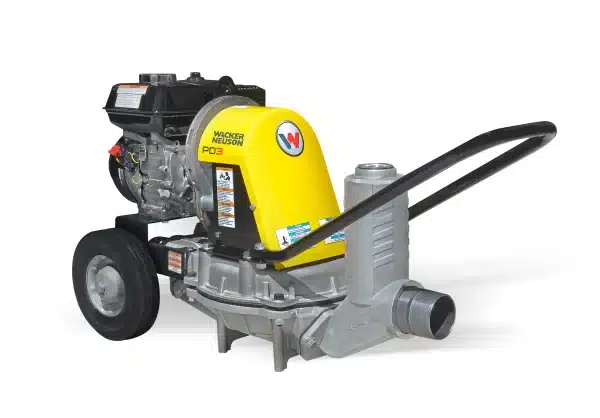
Wacker Neuson PDI Series Diaphragm Pump for Mud, Slurry, and Industrial Dewatering
The Wacker Neuson PDI Series diaphragm pump is a powerful, Honda-engine driven pump built for moving mud, slurry, and solids-laden water in the most demanding construction and industrial environments. Available through Ken’s Distributing Company, the PDI3A is the flagship model in this series, featuring a 3-inch (76 mm) intake diameter, a maximum flow rate of 88 gallons per minute, and a solids handling capacity of up to 1.6 inches (41 mm) in diameter. For site managers and procurement teams dealing with applications that go beyond what standard submersible or centrifugal pumps can handle, the PDI Series delivers the power, durability, and operational reliability required to keep dewatering operations running without interruption.
The PDI Series shares core engineering principles with the Wacker Neuson PDT Series but is positioned specifically for industrial-grade diaphragm pumping applications. Its construction around a ductile iron crankcase, oil bath lubricated transmission, and aluminum alloy pump housing reflects a design philosophy that prioritizes long service life, low maintenance requirements, and consistent performance under continuous heavy use.
How Does the Wacker Neuson PDI Diaphragm Pump Work?
The PDI Series operates as a positive displacement diaphragm pump. The Honda gasoline engine drives a gear transmission that moves a heavy-duty rubber diaphragm back and forth in a reciprocating motion. On the intake stroke, the diaphragm flexes outward and creates a low-pressure zone that draws fluid through the inlet valve into the pump chamber. On the discharge stroke, the diaphragm flexes inward, pressurizing the chamber and pushing the fluid out through the outlet valve toward the discharge point.
This mechanism means the PDI Series never requires the fluid to pass through a spinning impeller. Instead, the fluid moves through a straight-through flow path with no rotating components in contact with it. As a result, the PDI can handle large solids, coarse aggregate, thick slurry, and abrasive material that would rapidly destroy the impeller of a centrifugal pump. The inlet-side surge chamber further smooths this process by absorbing pressure spikes between strokes, reducing vibration and extending diaphragm life.
Key Features of the Wacker Neuson PDI Series Diaphragm Pump
Straight-Through Water Flow Design
The PDI3A uses a straight-through flow path that allows solids, gravel, and coarse material to pass directly through the pump without encountering bends, restrictions, or impeller housings that could cause blockage. This design delivers high production pumping capacity while keeping downtime caused by blockages to a minimum. On sites where the pumped fluid contains unpredictable solid content, this feature provides a significant operational advantage over pump types with more complex internal flow paths.
Ductile Iron Crankcase and Hardened Forged Gears
The crankcase of the PDI3A is manufactured from ductile iron, a material that combines high tensile strength with good impact and fatigue resistance under the cyclic loading that characterizes continuous diaphragm pump operation. Inside the crankcase, hardened forged gears transmit power from the Honda engine to the pump diaphragm with high mechanical efficiency. These gears are manufactured to tighter tolerances than standard cast gears, providing quieter operation and a longer service life between rebuild intervals.
Lightweight Aluminum Alloy Pump Housing
Despite the heavy-duty internal construction, the pump body uses an aluminum alloy housing that keeps overall weight manageable for a pump in this performance class. The PDI3A ships at 174.2 pounds and is mounted on a wheeled frame with large solid rubber tires, making it practical to reposition across rough terrain on active construction and industrial sites without requiring lifting equipment.
Oil Bath Lubricated Transmission
The gear transmission system operates in a continuous oil bath, providing self-sustaining lubrication to all transmission components throughout the operating cycle. This eliminates manual lubrication requirements for the transmission, reduces gear wear rates, and prevents the lubrication failures that can occur in splash-lubricated or grease-packed transmission systems under sustained high-duty operation. For industrial applications where the PDI Series may run for extended periods, this system is a meaningful maintenance cost reducer.
Surge Chamber on the Inlet Side
The inlet-side surge chamber is an engineered feature that absorbs the pressure fluctuations inherent to reciprocating diaphragm pump operation. By dampening these spikes before they reach the pump internals, the surge chamber produces a smoother pumping action, reduces mechanical stress on the diaphragm and valve assemblies, and contributes to longer component service life. The practical result is more consistent flow output and fewer unplanned maintenance intervals caused by diaphragm fatigue or valve wear.
Honda Gasoline Engine
The PDI3A is powered by a Honda single-cylinder, 118 cc gasoline engine rated at 3.5 horsepower at 3,600 rpm. Under normal operating load the engine runs at 2,800 rpm, consuming approximately 0.3 gallons of fuel per hour. The 0.5-gallon fuel tank provides approximately 2 hours of continuous operation at full capacity. The Honda engine is one of the most widely serviced small gasoline engines in the world, which means parts availability and qualified service support are accessible across virtually all markets where Kendisco operates.
Large Solid Rubber Tires
The wheeled frame of the PDI3A is fitted with large solid rubber tires that provide reliable traction and smooth rolling across compacted gravel, mud, concrete, and uneven ground. Solid tires eliminate the puncture risk associated with pneumatic tires in debris-laden construction environments, ensuring the pump can be repositioned whenever site conditions change without tire-related delays.
Technical Specifications: Wacker Neuson PDI3A Diaphragm Pump
Complete technical data for the PDI3A is provided below in both metric and imperial units.
Metric Specifications
| Specification | PDI3A (PD13A) |
|---|---|
| Max Flow Rate | 333 l/min |
| Max Solids Diameter | 41 mm |
| Max Suction Head | 6.1 m |
| Max Delivery Height | 7.6 m |
| Intake/Pressure Socket Dia. | 75 mm |
| Engine Type | Gasoline |
| Engine Manufacturer | Honda |
| Cylinders | 1 |
| Cylinder Capacity | 118 cm3 |
| Max Power Rating | 2.6 kW |
| Engine Speed at Max Power | 3,600 rpm |
| Operating Engine Speed | 2,800 rpm |
| Fuel | Gasoline |
| Fuel Consumption | 1.1 L/hr |
| Tank Capacity | 2 L |
| Oil Filling Max. | 0.6 L |
| Running Time at 100% | 2 hrs |
| Power Standard | SAE J1349 |
| Length | 1,102 mm |
| Width | 671 mm |
| Height | 594 mm |
| Shipping Weight | 79 kg |
Imperial Specifications
| Specification | PDI3A (PD13A) |
|---|---|
| Max Flow Rate | 88 gal/min |
| Max Solids Diameter | 1.6 in |
| Max Suction Head | 20 ft |
| Max Delivery Height | 24.9 ft |
| Intake/Pressure Socket Dia. | 3 in |
| Engine Type | Gasoline |
| Engine Manufacturer | Honda |
| Cylinders | 1 |
| Cylinder Capacity | 7.2 in3 |
| Max Power Rating | 3.5 hp |
| Engine Speed at Max Power | 3,600 rpm |
| Operating Engine Speed | 2,800 rpm |
| Fuel | Gasoline |
| Fuel Consumption | 0.3 GPH |
| Tank Capacity | 0.5 gal |
| Oil Filling Max. | 0.2 gal |
| Running Time at 100% | 2 hrs |
| Power Standard | SAE J1349 |
| Length | 43.4 in |
| Width | 26.4 in |
| Height | 23.4 in |
| Shipping Weight | 174.2 lb |
PDI Series Model Variant and Item Number
| Model | Item Number | Intake Size | Max Flow Rate | Max Solids Diameter | Engine |
|---|---|---|---|---|---|
| PDI3A | 5100075508 | 3 in (76 mm) | 88 gal/min | 1.6 in (41 mm) | Honda Gasoline |
Applications: Where the Wacker Neuson PDI Diaphragm Pump Performs Best
The PDI3A is built for applications where the fluid being pumped is too thick, too contaminated, or contains solids too large for centrifugal or electric submersible pumps to manage. Its gasoline engine drive makes it fully independent of electrical power infrastructure, extending its usefulness to remote and off-grid locations.
- Industrial Site Dewatering: Removing heavily contaminated water, mud, and slurry from industrial facilities, processing plants, and heavy manufacturing environments where fluid composition varies significantly and high solids content is the norm.
- Construction Mud and Slurry Removal: Pumping thick, solids-laden water from deep excavations, foundation pits, and sheet pile cofferdam interiors where accumulated sediment and construction debris make standard pumps impractical.
- Mining and Quarry Operations: Dewatering quarry faces, mine sumps, and processing areas where abrasive rock particles, fine aggregate, and coarse sediment are present in pumped fluid. The diaphragm mechanism protects internal components from the abrasion that would rapidly wear a centrifugal impeller.
- Tunnel and Underground Construction: Managing water inflows in tunneling, pipe jacking, and underground infrastructure construction where confined conditions and variable water quality demand a robust, portable pump solution.
- Environmental Remediation: Transferring contaminated water, sludge, and slurry in environmental cleanup, soil remediation, and hazardous waste management applications where positive displacement pumping provides greater control over flow rates and fluid handling.
- Civil Engineering Works: Supporting bridge abutment construction, culvert installation, retaining wall foundation work, and other civil projects where ground disturbance creates consistently poor water quality that requires a pump capable of handling unpredictable solid content.
- Remote and Off-Grid Sites: The Honda gasoline engine makes the PDI3A fully self-contained, suitable for deployment at remote construction sites, rural infrastructure projects, and emergency response scenarios where electrical power is unavailable.
Wacker Neuson PDI Series vs. PDT Series: Understanding the Difference
The PDI Series and PDT Series share the same core diaphragm pump engineering platform. Both use a Honda gasoline engine, ductile iron crankcase, oil bath lubricated transmission, and straight-through flow design. The key distinction lies in the intended application focus and the available model range.
| Feature | PDI Series | PDT Series |
|---|---|---|
| Application Focus | Industrial diaphragm pumping | Construction and civil dewatering |
| Available Models | PDI3A (3-inch intake only) | PDT3A (3-inch) and PDT2A (2-inch) |
| Max Flow Rate | 88 gal/min | 88 gal/min (PDT3A), 49.9 gal/min (PDT2A) |
| Max Solids Diameter | 1.6 in (41 mm) | 1.6 in (PDT3A), 1.3 in (PDT2A) |
| Engine | Honda 3.5 hp gasoline | Honda 3.5 hp gasoline |
| Intake Diameter | 3 in (76 mm) | 3 in or 2 in depending on model |
| Max Delivery Height | 24.9 ft (7.6 m) | 24.9 ft (7.6 m) |
If your application requires a 2-inch intake option or a lower flow rate configuration, the Wacker Neuson PDT Series diaphragm pump provides the PDT2A as an additional option. For industrial applications where the 3-inch, maximum-flow configuration is the appropriate specification, the PDI3A is the direct choice. If your application involves cleaner water or requires electrical power operation, the Wacker Neuson PST Series heavy-duty submersible pump or the Wacker Neuson PG Series engine-driven dewatering pump may be more appropriate.
How to Set Up and Operate the Wacker Neuson PDI3A Diaphragm Pump
The PDI3A is designed for straightforward field deployment on a wheeled frame. The operational steps below are provided for general reference only. Always consult the official Wacker Neuson operator’s manual and the Honda engine manual before use.
- Pre-operation checks: Verify engine oil level using the dipstick and top up with the correct grade if required. Check the fuel level and refill with fresh gasoline if needed. Inspect the diaphragm housing, suction hose connections, and discharge fittings for visible damage or loose connections before starting.
- Position the pump: Roll the PDI3A to the pumping location using the wheeled frame. Place it on stable, level ground within 20 feet of the water surface to remain within the rated suction head. The closer the pump is positioned to the water, the more efficiently it will prime and operate.
- Connect suction and discharge hoses: Attach the suction hose securely to the 3-inch intake socket and lower the suction end into the fluid source. Connect the discharge hose to the outlet and route it to the designated discharge point, keeping the hose free of sharp bends that could restrict flow.
- Prime the pump: Pour clean water into the suction hose or pump chamber to assist priming on initial startup or after a period of storage. The PDI3A is a self-priming design but benefits from assisted priming when first put into service or restarted after dry storage.
- Start the Honda engine: Set the choke to the cold start position if the engine is cold. Open the fuel valve, move the ignition switch to the on position, and pull the recoil starter with a firm, smooth motion. Once the engine fires, allow it to warm briefly before moving to full operating throttle.
- Confirm operation: Verify that consistent discharge flow is established within the first minute of running. Check all hose connections for leaks and confirm the engine is running smoothly at operating speed. Monitor fuel level throughout the operating period, particularly during extended shifts.
- Shutdown and cleanup: Reduce throttle before switching the engine off. Close the fuel valve after shutdown. If the pump has been used with thick slurry or highly contaminated fluid, flush the pump chamber and hoses with clean water before storage to prevent material from drying and hardening inside the pump.
Safety Notice: This guidance is for general reference only. Always follow the complete instructions in the official Wacker Neuson operator’s manual and the Honda engine operation manual. Contact Kendisco for official documentation, replacement parts, and technical support from Ken’s Distributing Company.
Frequently Asked Questions: Wacker Neuson PDI Series Diaphragm Pump
What is the Wacker Neuson PDI Series diaphragm pump used for?
The Wacker Neuson PDI Series diaphragm pump is used for pumping mud, slurry, and solids-laden water in industrial, construction, mining, and civil engineering applications where fluid composition is too thick or contaminated for centrifugal or submersible pumps. The PDI3A is particularly suited to high-volume industrial applications where maximum flow rate and solids handling capacity are the primary requirements.
What size solids can the PDI3A handle?
The Wacker Neuson PDI3A handles solids up to 1.6 inches (41 mm) in diameter. This is the highest solids handling capacity available in the Wacker Neuson diaphragm pump range and makes the PDI3A suitable for applications involving gravel, coarse aggregate, rock fragments, and other large solid material in the pumped fluid.
What is the maximum flow rate of the PDI3A?
The Wacker Neuson PDI3A delivers a maximum flow rate of 88 gallons per minute (333 liters per minute). This output is achieved through the 3-inch straight-through flow path and the Honda engine operating at 2,800 rpm under normal load conditions.
What is the difference between the PDI Series and the PDT Series?
The PDI Series and PDT Series share the same core engineering platform, including the Honda engine, ductile iron crankcase, and oil bath lubricated transmission. The PDI Series is available only as the PDI3A with a 3-inch intake, positioned for industrial applications. The PDT Series is available in both PDT3A (3-inch) and PDT2A (2-inch) configurations, providing a lower-flow option for construction and civil dewatering applications where a smaller pump size is more appropriate.
How far can the PDI3A pump water vertically?
The Wacker Neuson PDI3A has a maximum delivery height of 24.9 feet (7.6 meters) and a maximum suction head of 20 feet (6.1 meters). These figures reflect the operational limits of a diaphragm pump design, which prioritizes solids handling and priming capability over high-head delivery. For applications requiring greater vertical lift, a centrifugal pump such as the Wacker Neuson PG Series would be the more appropriate choice.
Does the PDI3A require electrical power?
No. The Wacker Neuson PDI3A is entirely self-contained, powered by a Honda gasoline engine. It requires no electrical power supply, making it suitable for remote sites, off-grid locations, and emergency deployments where electrical infrastructure is unavailable or impractical to set up.
How long can the PDI3A run on a single tank of fuel?
The PDI3A runs for approximately 2 hours at 100 percent load from its 0.5-gallon fuel tank, with a consumption rate of 0.3 gallons per hour. At reduced loads, run time will be extended. Plan refueling intervals based on your expected operating load and the duration of each dewatering shift.
Where can I purchase the Wacker Neuson PDI Series diaphragm pump?
The Wacker Neuson PDI Series diaphragm pump is available through Kendisco, operating as Ken’s Distributing Company, an authorized Wacker Neuson distributor. Contact Kendisco for current pricing, availability, and delivery options for the PDI3A.
Related Wacker Neuson Pumps Available at Kendisco
Ken’s Distributing Company supplies the complete Wacker Neuson water pump range. If you are comparing options or need a different specification for your application, the following products may be relevant.
- Wacker Neuson PDT Series diaphragm pump for construction dewatering with 2-inch and 3-inch intake options
- Wacker Neuson PST Series heavy-duty submersible pump for electric-powered solids-tolerant dewatering
- Wacker Neuson PSA Series submersible pump for dirty water dewatering with automatic operation
- Wacker Neuson PG Series engine-driven dewatering pump for high-flow gasoline-powered site dewatering
- Wacker Neuson PT6 self-priming trash pump for large-volume construction dewatering with solids handling
Send us your model number and we will confirm fit, price, and availability.