
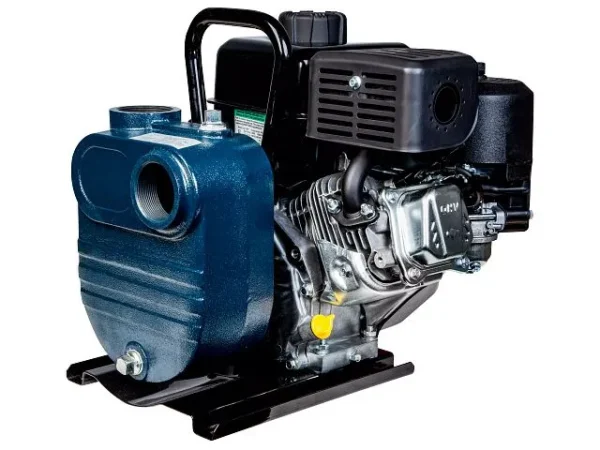
Franklin Electric FBSGF Gas Engine Driven Self-Priming Pump
FBSGF Pump Manuals & Resources
The Franklin Electric FBSGF Gas Engine Driven Self-Priming Pump is a reliable, cast iron portable centrifugal pump built for water transfer, temporary irrigation, construction dewatering, and agricultural pumping applications where electrical power is not available. Powered by Briggs and Stratton engines in two displacement options, the FBSGF delivers dependable self-priming performance through a semi-open cast iron impeller with a protective blind hole design that shields the engine shaft from corrosive liquid contact. At Ken’s Distributing Company, we stock both FBSGF models and carry genuine replacement parts to keep your pump running through the season.
What Is the Franklin Electric FBSGF Gas Engine Self-Priming Pump?
The FBSGF is Franklin Electric’s Briggs and Stratton powered self-priming centrifugal pump series designed for portable and temporary pumping applications across agricultural, construction, mining, and general service markets. The designation FBSGF identifies this as Franklin Electric’s self-priming pump series in the gas engine driven close-coupled configuration with a semi-open impeller, following the same naming convention used across the Franklin Electric self-priming pump family.
Two models cover different flow requirements within the series. The FBSGF-8 uses a Briggs and Stratton 127 CC engine with 2-inch connections for lighter portable applications. The FBSGF-10 uses a larger Briggs and Stratton 205 CC engine with the same 2-inch connections but higher engine output for greater flow capacity. Both models share the same cast iron construction, semi-open impeller design, FKM mechanical seal, and self-priming volute configuration.
The FBSGF is one of the strongest performing pages in the Franklin Electric gas engine pump category at Kendisco, and for good reason. It fills a specific gap in the portable pump market for a self-priming gas engine pump that prioritizes reliable everyday performance in agricultural and general service conditions over specialized solids handling or maximum pressure output. Kendisco is an authorized Franklin Electric distributor and your direct source for FBSGF units and genuine replacement parts.
Technical Specifications
| Specification | Value |
|---|---|
| Volute Material | Cast Iron |
| Impeller Type | Semi-Open Cast Iron with Blind Hole |
| Seal | Carbon/Ceramic faces, FKM elastomers, 300 Series Stainless Steel |
| Engine Options | Briggs and Stratton |
| Throttle Control | Adjustable throttle controls |
| Mounting Orientation | Horizontal |
| Self-Priming | Yes, with tapped priming, venting, and draining ports |
Order Information
FBSGF Gas Engine Driven Self-Priming Pump
| Item | Model | Engine Brand For Driven Pumps | Engine Size – Driven Pumps (CC) | Suction Diameter | Discharge Diameter |
|---|---|---|---|---|---|
| 90271008 | FBSGF-8 | Briggs & Stratton | 127 | 2 “ | 2 “ |
| 90271010 | FBSGF-10 | Briggs & Stratton | 205 | 2 “ | 2 “ |
| 90271108 | FBSGF-8H | Honda | 118 | 2 “ | 2 “ |
| 90271110 | FBSGF-10H | Honda | 160 | 2 “ | 2 “ |
| 90271112 | FBSGF-12H | Honda | 270 | 3 “ | 3 “ |
Understanding the FBSGF Model Designations
The FBSGF model numbers follow the Franklin Electric naming convention for this product family. The number after FBSGF indicates the pump size within the series. The FBSGF-8 is the smaller model with the 127 CC Briggs and Stratton engine suited for lighter portable applications where a compact, easy-to-handle unit is preferred. The FBSGF-10 is the larger model with the 205 CC Briggs and Stratton engine providing higher flow output for applications that need more volume while still using the same 2-inch connection size.
Both models share identical 2-inch suction and discharge connections, which simplifies hose and fitting sourcing when you operate multiple units or need to swap between models on a job site. The same 2-inch fittings work with either model without adapters.
Contact Ken’s Distributing at 303.699.7845 for specific performance curve data for each FBSGF model to confirm which one matches your GPM and head requirements before ordering.
The Blind Hole Impeller Design: Protecting the Engine Shaft
One of the most practically important features of the FBSGF impeller is the blind hole connection between the impeller and the engine shaft. This is a specific engineering detail worth understanding because it directly affects the long-term service life of the pump in agricultural and field applications.
In a standard threaded or keyed shaft connection, the interface between the impeller hub and the pump or engine shaft is exposed to the pumped liquid. When that liquid is corrosive, chemically aggressive, or contains dissolved salts and minerals as many agricultural water sources do, this shaft interface can corrode over time. Corrosion at the shaft connection makes future impeller removal difficult or impossible without damaging the shaft, which can turn a routine seal replacement into an expensive shaft or engine repair.
The blind hole design seals the bottom of the impeller hub so the shaft end is not exposed to the pumped liquid. The liquid contacts the impeller vanes and shroud but cannot reach the shaft connection point at the blind end of the hub. This protects the engine shaft from corrosive attack in agricultural water conditions, fertilizer solutions, and the kind of water that real-world pump applications involve. The result is a pump that comes apart properly during service rather than one where a corroded shaft connection turns a simple seal job into a major repair.
Construction Details
Cast Iron Volute with Service Ports
The FBSGF volute is rugged cast iron with tapped openings for priming, venting, and draining built into the body. These ports serve three specific functions during the pump lifecycle. The priming port is used to fill the housing before first startup. The venting port allows air to escape during initial fill and priming. The drain port enables complete housing drainage for winterizing or extended storage without disconnecting hose connections. Cast iron construction provides the durability and pressure handling appropriate for continuous-duty gas engine driven operation.
Semi-Open Cast Iron Impeller
The semi-open cast iron impeller with the blind hole shaft protection design handles water with light solids and debris without clogging while protecting the engine shaft from corrosive liquid contact. The semi-open geometry, with vanes on one shroud, provides adequate passage for light solids and organic debris common in pond and canal water sources used for agricultural irrigation. For heavier solids content up to 10% by volume, the FMIG Series with its wear plate and higher-rated solids tolerance is the better choice. For clean water pressure applications, the FNSGF enclosed impeller delivers better pressure performance.
FKM Mechanical Seal
The mechanical seal uses carbon and ceramic sealing faces with FKM (Fluoroelastomer) elastomers and 300 Series stainless steel hardware. FKM provides substantially better chemical and temperature resistance than standard BUNA or Nitrile elastomers. This matters specifically in agricultural applications where the pumped water may contain fertilizer solutions, dissolved minerals, and mild chemical content that would degrade standard seal materials prematurely. The carbon and ceramic faces require liquid contact for lubrication and cooling throughout all operation.
Briggs and Stratton Engine with Adjustable Throttle
Both FBSGF models use Briggs and Stratton engines, a widely used small engine platform with an extensive domestic dealer network for parts and service. The adjustable throttle control on both models allows pump output to be varied during operation to match different irrigation zones, changing site conditions, or varying flow requirements throughout a work shift without stopping and restarting the engine.
Applications and Industries
The FBSGF fills a practical role in the portable pump market as a reliable, self-priming gas engine pump for everyday agricultural and general service pumping without the specialized features or higher cost of the FMIG or FNSGF Series.
- Temporary Irrigation: The FBSGF is specifically noted as a solution for temporary irrigation systems. Portable pump setups for seasonal field irrigation, temporary crop watering during equipment transfers, and emergency irrigation when permanent pump systems are down are all well-matched to the FBSGF’s self-priming gas engine design.
- Agricultural Irrigation: Farm irrigation from ponds, streams, and open water sources without electrical power access. The self-priming design handles the repeated daily start-stop cycles of irrigation automation without operator involvement. The blind hole impeller protects the engine shaft from the corrosive water chemistry common in agricultural settings.
- Construction Dewatering: Site dewatering on active construction projects before permanent electrical service is established. The FBSGF handles the lightly contaminated water typical of construction site groundwater seepage and rain accumulation in excavations.
- Mining: Remote mining site water management where portable, gas engine independent pumping is required. The cast iron construction and self-priming capability handle the demands of mining site water conditions.
- Municipal: Emergency water transfer, hydrant area support, and temporary pumping needs during maintenance operations where portable self-contained pumping is required quickly.
- Commercial: Portable commercial irrigation, nursery watering, and commercial property water transfer in locations without convenient electrical access.
- Light Industrial: Portable industrial water transfer, temporary cooling water supply, and site water management where a self-priming gas engine pump provides a practical solution without electrical infrastructure.
Features and Benefits
- Blind Hole Impeller for Engine Shaft Protection: The sealed blind hole at the impeller hub prevents pumped liquid from reaching the engine shaft connection point. This protects the shaft from corrosion in agricultural and field water conditions, ensuring the impeller can be removed properly during routine service without a corroded connection turning a simple job into an expensive repair.
- Self-Priming After Initial Fill: Tapped priming, venting, and draining ports in the cast iron volute. Fill once before the first startup. The self-priming design handles every subsequent restart automatically during normal daily operation without any manual intervention.
- FKM Fluoroelastomer Mechanical Seal: Significantly better chemical and temperature resistance than standard seal elastomers. Appropriate for fertilizer solutions and the mineral content common in agricultural water sources. Carbon and ceramic faces provide long seal life in clean to mildly contaminated water.
- Semi-Open Impeller for Light Solids Handling: Handles water with light organic debris, silt, and fine particles common in pond and canal water sources. The semi-open geometry provides better solids passage than an enclosed impeller without sacrificing the self-priming reliability that the FBSGF is designed to deliver.
- Briggs and Stratton Engine with Broad Service Network: Both models use Briggs and Stratton engines with one of the widest domestic dealer and parts networks of any small engine brand. Wherever you operate in the country, Briggs service and parts access are nearby.
- Adjustable Throttle Control: Vary pump output during operation to match different irrigation zones, pressure requirements, and site conditions. No need to stop and restart the engine to adjust flow output.
- No Electrical Connection Required: Completely self-contained gas engine power. No generator, no power cord, no electrical hookup. Position the pump wherever the work demands without any electrical infrastructure consideration.
- Equal 2-Inch Suction and Discharge on Both Models: Standard 2-inch connections on both the FBSGF-8 and FBSGF-10 mean the same hoses and fittings work with either model. Simpler inventory management when operating multiple units or upgrading from the smaller to the larger model.
- Horizontal Mounting for Stable Operation: Designed for horizontal installation on a flat surface, skid, or trailer. The horizontal orientation provides a stable operating platform that manages engine and pump vibration throughout the duty cycle.
FBSGF vs. FMIG vs. FNSGF: Choosing the Right Gas Engine Self-Priming Pump
Franklin Electric offers three gas engine driven self-priming pump series at Kendisco. Here is a practical comparison to help you select the right one.
| Feature | FBSGF Series | FMIG Series | FNSGF Series |
|---|---|---|---|
| Impeller Type | Semi-open with blind hole | Semi-open with 10% solids tolerance | Enclosed for higher pressure |
| Shaft Protection | Blind hole impeller | Standard connection | Standard connection |
| Solids Handling | Light solids and debris | Up to 10% mud, sand, silt by volume | Clean to mildly dirty water |
| Wear Plate | No | Replaceable steel wear plate | No |
| Seal Elastomer | FKM | FKM | FKM |
| Primary Strength | Reliable general service, shaft protection | High solids, high flow capacity | Higher pressure output |
| Engine Options | Briggs and Stratton | Honda or Kohler | Honda |
| Max Flow | Moderate range | Up to 300 GPM | Moderate to high range |
| Best For | General agricultural and temporary irrigation | High-solids large-scale applications | Pressure-sensitive temporary irrigation |
The FBSGF is the right choice for everyday agricultural irrigation and general portable service where you need a reliable self-priming gas engine pump without the specialized solids handling of the FMIG or the pressure focus of the FNSGF. The blind hole shaft protection is a unique feature of the FBSGF that makes it especially practical in corrosive agricultural water conditions where long-term shaft integrity matters. Call Ken’s Distributing at 303.699.7845 to discuss which pump fits your specific water quality, flow, and pressure requirements.
Installation and Setup
- Mounting: Install the FBSGF on a flat, stable surface in the horizontal orientation. Secure the base firmly before connecting hoses. Engine vibration on an unsecured unit can cause movement and suction-side air leaks that will affect self-priming performance.
- Initial Priming: Fill the pump housing through the tapped priming port before the first startup. Use the venting port to bleed air from the housing during the initial fill. After this first fill, the self-priming design handles every subsequent restart automatically without manual intervention.
- Suction Line: Use 2-inch suction hose matched to the suction port. Keep the suction line short and direct. Ensure all suction connections are fully air-tight. Air leaks on the suction side are the most common cause of self-priming failure and reduced pump performance. A foot valve at the water source can help retain prime between longer shutdown periods.
- Discharge Line: Connect 2-inch discharge hose to the discharge port. Install a check valve on the discharge side to prevent backflow when the engine shuts down and protect the self-priming liquid reservoir in the pump housing.
- Throttle Management: Start the Briggs and Stratton engine at low throttle and advance gradually to operating speed. Use the adjustable throttle to match output to your irrigation or transfer requirements. Running at partial throttle when full output is not needed reduces fuel consumption and extends engine service intervals.
- Mechanical Seal: Never run the FBSGF dry. The carbon and ceramic seal faces require liquid at all times for lubrication and cooling. Dry running at engine speed causes immediate, irreversible seal damage even in brief incidents.
- Service Port Use: Use the priming port for initial fill, the venting port to bleed air during commissioning, and the drain port to completely empty the housing before storage in freeze conditions or extended off-season storage.
- Engine Maintenance: Follow the Briggs and Stratton maintenance schedule for oil changes, air filter service, and spark plug replacement. Perform a complete engine service check before the first startup of each season, including fresh oil, clean air filter, and spark plug inspection.
Replacement Parts and Service
The FKM mechanical seal is the primary service component on the FBSGF pump end. The blind hole impeller design ensures that when seal service is needed, the impeller can be removed without fighting a corroded shaft connection, which makes routine maintenance significantly faster and less frustrating in the field.
Ken’s Distributing Company carries genuine Franklin Electric FBSGF replacement parts including FKM mechanical seals and semi-open cast iron impellers. When service components are needed, call us at 303.699.7845 and we will identify the correct part by model number and get it shipped quickly to minimize your downtime during the season.
For Briggs and Stratton engine service parts, contact your local Briggs and Stratton authorized dealer with the engine model and serial number from the engine data plate.
Browse our Franklin Electric replacement parts and repair kits for the FBSGF Series and all other Franklin Electric pump lines.
Frequently Asked Questions
What does FBSGF stand for in Franklin Electric pump naming?
FBSGF refers to Franklin Electric’s self-priming centrifugal pump series in the gas engine driven close-coupled configuration with a semi-open impeller. It follows the same naming convention as the FBSE and FBSEF electric motor driven self-priming series, with the G indicating gas engine drive and the F indicating the frame or configuration of this specific series.
What is the blind hole on the FBSGF impeller and why does it matter?
The blind hole is a sealed cavity at the bottom of the impeller hub where it connects to the engine shaft. This design prevents the pumped liquid from reaching the shaft connection point. In agricultural and field water applications where the water carries dissolved minerals, salts, and mild chemicals, a standard open shaft connection would allow corrosive liquid to attack the shaft metal over time. The blind hole keeps the shaft dry, preventing corrosion at the connection point and ensuring the impeller can be removed properly during routine service without a corroded joint that makes the job much harder and more expensive.
Is the FBSGF pump self-priming?
Yes. After the initial housing fill through the tapped priming port, the FBSGF self-priming design handles every subsequent restart automatically. Tapped venting and draining ports in the cast iron volute make initial commissioning and seasonal drainage straightforward. In most installations, a foot valve on the suction line is not required because the self-priming system retains adequate liquid between cycles.
What is the difference between the FBSGF-8 and FBSGF-10?
The FBSGF-8 uses a Briggs and Stratton 127 CC engine for lighter portable applications where a compact, easy-to-handle unit is preferred. The FBSGF-10 uses a larger Briggs and Stratton 205 CC engine for higher flow output where more pumping capacity is needed. Both use the same 2-inch suction and discharge connections, the same cast iron construction, and the same FKM mechanical seal. The choice comes down to your required flow rate. Call Ken’s Distributing at 303.699.7845 for performance data to confirm which model fits your application.
Can the FBSGF handle fertilizer or chemically treated water?
The FKM Fluoroelastomer mechanical seal provides good resistance to fertilizer solutions and mildly aggressive agricultural chemicals. The cast iron volute and semi-open impeller are appropriate for standard agricultural water with mild chemical content. The blind hole impeller design provides additional protection against chemical attack at the shaft connection. For strongly corrosive or highly acidic solutions, consult Ken’s Distributing at 303.699.7845 before ordering to confirm material compatibility.
Does the FBSGF require a foot valve on the suction line?
In most installations, the self-priming design retains adequate liquid in the housing between cycles without a separate foot valve. However, on installations with longer suction lines or significant elevation drop from the water source to the pump, a foot valve at the water source can improve self-priming reliability and reduce restart time after extended shutdown periods.
Can I get FBSGF replacement parts from Kendisco?
Yes. Ken’s Distributing Company carries genuine Franklin Electric FBSGF replacement parts including FKM mechanical seals and semi-open cast iron impellers. Call 303.699.7845 for availability and fast shipping on all service components for both the FBSGF-8 and FBSGF-10 models.
Related Products
- View the Franklin Electric FBSGF branded model page for additional specifications
- Compare with the Franklin Electric FMIG gas engine self-priming pump for high-solids applications
- See the FNSGF gas engine self-priming pump for higher pressure portable applications
- Compare with the Franklin Electric FTSP gas engine self-priming pump for higher flow options
- Shop Franklin Electric replacement parts and repair kits for all series
Authorized Franklin Electric Distributor | Get Your Quote Today | Call 303.699.7845 | Repair Parts Available | Fast Shipping Available