
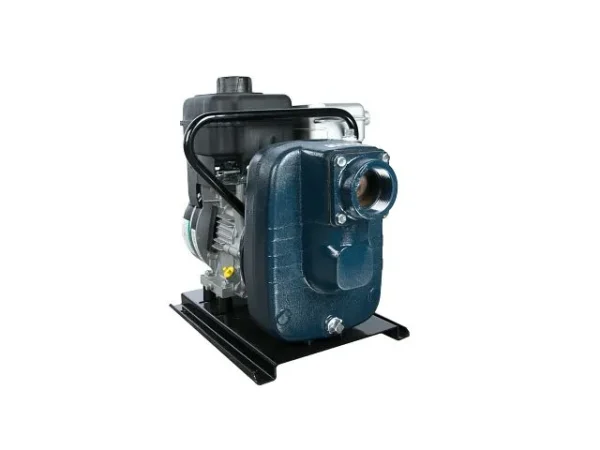
Franklin Electric FNSGF Gas Engine Driven Self-Priming Pump
FNSGF Pump Manuals & Repair Resources
The Franklin Electric FNSGF Gas Engine Driven Self-Priming Pump is a portable, high-pressure centrifugal pump built for irrigation, construction, mining, and temporary water transfer applications where electrical power is not available and reliable self-priming performance is essential. Powered by Honda engines in two displacement options, the FNSGF delivers high-pressure output through an enclosed cast iron impeller and a rugged cast iron volute, making it the right choice when you need pressure performance from a portable gas engine self-priming pump. At Ken’s Distributing Company, we stock both FNSGF models and can help you match the right port size and engine displacement to your application.
What Is the Franklin Electric FNSGF Gas Engine Self-Priming Pump?
The FNSGF is Franklin Electric’s gas engine driven self-priming centrifugal pump series designed specifically for higher-pressure portable pumping applications. The designation FNSGF identifies this as Franklin Electric’s gas engine self-priming pump with an enclosed impeller configuration, which is the key design choice that differentiates the FNSGF from the FMIG and FBSGF Series in the Franklin Electric gas engine pump lineup.
While the FMIG uses a semi-open impeller for solids handling and the FBSGF focuses on self-priming general service, the FNSGF uses an enclosed cast iron impeller specifically chosen for higher pressure delivery. An enclosed impeller, with shrouds on both the front and back of the impeller vanes, produces better pressure at a given RPM than a semi-open or open impeller design. This makes the FNSGF the preferred choice among the Franklin Electric gas engine self-priming pumps when your application requires pressure output as a primary performance requirement rather than solids handling.
Kendisco is an authorized Franklin Electric distributor. Every FNSGF pump ordered through Ken’s Distributing Company is a genuine Franklin Electric product with full manufacturer support and access to genuine replacement parts.
Technical Specifications
| Specification | Value |
|---|---|
| Volute Material | Cast Iron |
| Impeller Type | Enclosed Cast Iron |
| Seal | Carbon/Ceramic faces, FKM elastomers, 300 Series Stainless Steel |
| Engine Options | Honda (both models), Kohler and Briggs and Stratton available |
| Throttle Control | Adjustable throttle controls |
| Mounting Orientation | Horizontal |
| Self-Priming | Yes, with tapped priming, venting, and draining ports |
Order Information
FNSGF Gas Engine Driven Self-Priming Pump
| Item | Model | Engine Brand For Driven Pumps | Engine Size – Driven Pumps (CC) | Suction Diameter | Discharge Diameter |
|---|---|---|---|---|---|
| 90272105 | FNSGF-5H | Honda | 160 | 2 “ | 2 “ |
| 90272108 | FNSGF-8H | Honda | 270 | 2.5 “ | 2 “ |
Understanding the FNSGF Model Designations
The FNSGF model numbers indicate the pump size and engine configuration. The number after FNSGF indicates the relative pump size within the series. The H suffix identifies the Honda engine. The FNSGF-5H with its 160 CC Honda engine and 2-inch equal suction and discharge ports handles moderate portable pumping applications. The FNSGF-8H with its larger 270 CC Honda engine uses a 2.5-inch suction port paired with a 2-inch discharge port, reflecting the higher flow input needed at the suction side to supply the increased pump output the larger engine produces.
The asymmetric port sizing on the FNSGF-8H, with a larger suction than discharge, is a deliberate hydraulic design choice. A larger suction port reduces the fluid velocity on the inlet side, lowering friction loss and improving NPSH (Net Positive Suction Head) characteristics. This helps the pump maintain self-priming reliability at the higher flow rates the 270 CC engine generates while the 2-inch discharge port focuses the flow to maintain delivery pressure.
Contact Ken’s Distributing at 303.699.7845 for specific performance curve data for each FNSGF model to confirm the right size matches your GPM and pressure requirements.
The Enclosed Impeller Advantage: Why the FNSGF Delivers Higher Pressure
The single most important technical decision in the FNSGF design is the choice of an enclosed cast iron impeller rather than the semi-open impeller used in the FMIG and FBSGF Series. Understanding this choice explains why the FNSGF is the right pump for pressure-sensitive applications and why it handles slightly differently from other Franklin Electric gas engine self-priming pumps.
An enclosed impeller has shrouds on both the front and back of the impeller vanes, creating sealed flow channels between the inlet and outlet of each vane passage. This geometry converts a higher percentage of the rotational energy from the engine into pressure energy in the pumped liquid, compared to open or semi-open impeller designs where the absence of one or both shrouds allows some energy to be lost to recirculation between the impeller vanes and the volute walls.
The result is better pressure output at a given engine speed and impeller diameter. For applications like temporary irrigation systems where you need to push water up significant elevation changes, through long pipe runs, or across multiple sprinkler zones with meaningful pressure requirements, the enclosed impeller FNSGF delivers the pressure that semi-open impeller pumps in the same engine class cannot match.
The tradeoff is that the enclosed impeller does not handle solids as well as a semi-open design. If your water source carries significant silt, sand, or debris, the FMIG with its 10% solids tolerance and replaceable wear plate is the more appropriate choice. If your water source is relatively clean and your primary concern is pressure output, the FNSGF enclosed impeller is the right selection.
Construction Details
Cast Iron Volute with Service Ports
The FNSGF volute is rugged cast iron with tapped openings for priming, venting, and draining built into the body. These ports make initial pump commissioning straightforward. Fill through the priming port before first startup, vent air during the initial fill, and drain completely through the drain port for winterizing or extended storage without disconnecting installed piping. The cast iron construction handles the pressure and thermal demands of continuous-duty gas engine driven operation reliably over a long service life.
Enclosed Cast Iron Impeller
The enclosed cast iron impeller provides the pressure performance characteristic of the FNSGF Series. Cast iron construction delivers appropriate hardness and durability for the water conditions the FNSGF is designed for. The enclosed geometry with front and rear shrouds creates sealed hydraulic passages that maximize pressure conversion efficiency at the operating RPM the Honda engine delivers.
FKM Mechanical Seal
The mechanical seal uses carbon and ceramic sealing faces with FKM (Fluoroelastomer) elastomers and 300 Series stainless steel hardware. FKM provides substantially better chemical and temperature resistance than standard BUNA or Nitrile elastomers, making the FNSGF seal appropriate for fertilizer solutions, mildly corrosive agricultural water, and elevated temperature applications. The carbon and ceramic seal faces create a self-lubricating interface that requires liquid contact for cooling and lubrication during all operation.
Honda Engine with Adjustable Throttle
Both FNSGF models use Honda engines, a choice that reflects the brand’s established reputation for reliability, fuel efficiency, and consistent power output in portable equipment applications. The 160 CC engine on the FNSGF-5H and the 270 CC engine on the FNSGF-8H both include adjustable throttle controls for field output management. This allows you to vary pump speed and output during operation to match different irrigation zones, pressure requirements, and site conditions without stopping the pump and restarting at a different setting.
Applications and Industries
The FNSGF is most valuable in applications where pressure output from a portable gas engine self-priming pump is the defining performance requirement.
- Temporary Irrigation Systems: The FNSGF is specifically suited for temporary irrigation applications where a portable pump needs to deliver meaningful pressure to push water through a distribution system, up an elevation gain, or through a long pipe run to reach the irrigation zone. The enclosed impeller pressure performance handles these demands better than semi-open impeller alternatives at the same engine class.
- Agricultural Irrigation: Farm irrigation from ponds, canals, and open water sources in fields without electrical power. The self-priming design handles repeated daily start-stop cycles automatically. The 270 CC Honda engine on the FNSGF-8H provides the power for larger field applications requiring higher flow and pressure simultaneously.
- Construction Water Supply: Supplying water for concrete mixing, curing, dust control, and temporary facilities on active construction sites before permanent water service is established. Pressure output is important here for getting water to elevated floors and distant site locations.
- Dewatering: Construction site and excavation dewatering where the water is relatively clean and pressure is needed to push water through long discharge hose runs to the discharge point away from the work area.
- Mining: Remote mining site water management where electrical power is unavailable and the water source is sufficiently clean for enclosed impeller service.
- Municipal: Emergency water transfer, hydrant testing support, and temporary distribution system bypass where portable, self-contained pressure performance is needed quickly.
- Commercial and Light Industrial: Portable pressure washing supply, temporary process water, and commercial landscape irrigation in locations without permanent electrical connections.
Features and Benefits
- Enclosed Impeller for Higher Pressure Output: The most important differentiating feature of the FNSGF. The enclosed cast iron impeller converts a higher percentage of engine energy into pressure compared to open or semi-open alternatives. For pressure-sensitive applications, this translates directly into better system performance and longer effective pipe run distances.
- Self-Priming After Initial Fill: Tapped priming, venting, and draining ports in the cast iron volute. Fill once before first startup. The self-priming design handles every subsequent restart automatically without operator intervention during normal daily operation.
- FKM Fluoroelastomer Mechanical Seal: Better chemical and temperature resistance than standard BUNA or Nitrile elastomers. Appropriate for fertilizer solutions and mildly aggressive water chemistry common in agricultural applications. Carbon and ceramic faces provide long seal life in clean to mildly dirty water conditions.
- Honda Engine Reliability: Both FNSGF models use Honda engines known for fuel efficiency, consistent power output, and broad domestic and international service network access. A trusted engine platform for portable equipment that needs to run reliably in field conditions.
- Adjustable Throttle Control: Vary pump speed and output in the field during operation. Match pump output to different irrigation zones, pressure requirements, and site conditions without stopping the engine.
- Asymmetric Port Sizing on FNSGF-8H: The 2.5-inch suction paired with a 2-inch discharge on the FNSGF-8H improves suction-side hydraulic performance at higher flow rates, supporting reliable self-priming and reducing cavitation risk while maintaining discharge pressure.
- Rugged Cast Iron Construction: Volute and impeller in cast iron for durability in continuous-duty field service. Cast iron handles the thermal cycling, vibration, and pressure demands of gas engine driven pump operation throughout a long service life.
- Tapped Service Ports: Priming, venting, and draining ports in the volute make commissioning, air bleeding, and seasonal drainage straightforward without disconnecting installed piping or hose connections.
- Horizontal Mounting for Stability: Designed for stable horizontal installation on a flat surface, skid, or trailer. The horizontal orientation manages vibration from the gas engine and provides a stable operating platform throughout the duty cycle.
FNSGF vs. FMIG vs. FBSGF: Choosing the Right Gas Engine Self-Priming Pump
Franklin Electric offers three gas engine driven self-priming pump series at Kendisco. Here is a clear comparison to help you select the right one for your application.
| Feature | FNSGF Series | FMIG Series | FBSGF Series |
|---|---|---|---|
| Impeller Type | Enclosed cast iron | Semi-open cast iron | Semi-open cast iron |
| Primary Strength | Higher pressure output | High solids tolerance and high flow | Self-priming general service |
| Solids Handling | Clean to mildly dirty water | Up to 10% by volume | Light solids |
| Wear Plate | No | Replaceable steel wear plate | No |
| Seal Elastomer | FKM | FKM | Viton |
| Max Flow | Moderate, up to FNSGF-8H capacity | Up to 300 GPM | High flow range |
| Engine Options | Honda | Honda or Kohler | Multiple options |
| Best For | Pressure-sensitive temporary irrigation | High solids, large-scale agriculture | Self-priming general portable service |
Choose the FNSGF when pressure output is the primary performance requirement and your water source is relatively clean. Choose the FMIG when you need maximum solids tolerance with a replaceable wear plate for abrasive water conditions. Choose the FBSGF for general portable self-priming service where neither extreme pressure nor extreme solids handling is the defining requirement. Call Ken’s Distributing at 303.699.7845 and we will help you choose based on your specific water quality, flow, and pressure requirements.
Installation and Setup
- Mounting: Install the FNSGF on a flat, stable surface in the horizontal orientation. Secure the base before connecting suction and discharge hoses. Unsecured gas engine pump units vibrate during operation and can cause air leaks at suction connections that will affect self-priming reliability.
- Initial Priming: Fill the pump housing through the tapped priming port before the first startup. Use the venting port to bleed air from the housing during fill. After this initial fill, the self-priming design handles every subsequent restart automatically.
- Suction Line: Keep the suction line as short and direct as possible. Every foot of suction line and every bend increases friction loss and reduces available NPSH for reliable self-priming. Ensure all suction connections are fully air-tight. Even a small air leak on the suction side will prevent the self-priming system from working correctly.
- Discharge Line: Match your hose diameter to the discharge port size. On the FNSGF-8H, note that the discharge is 2 inches even though the suction is 2.5 inches. Do not reduce the discharge hose below 2 inches as this will create excessive back pressure and reduce pump performance.
- Throttle Management: Start the Honda engine at low throttle and advance gradually to operating speed. Use the adjustable throttle to match output to your system requirements. Avoid sustained maximum throttle when less output is adequate, as reduced engine speed lowers fuel consumption and extends Honda engine service intervals.
- Enclosed Impeller and Water Quality: The enclosed impeller on the FNSGF is designed for clean to mildly dirty water. If your water source carries significant silt, sand, or organic debris, consider whether the FMIG semi-open impeller with 10% solids tolerance is a better fit for your conditions. Running highly contaminated water through an enclosed impeller will accelerate wear and reduce the service interval between rebuilds.
- Mechanical Seal: Never run the FNSGF dry. The carbon and ceramic seal faces require liquid at all times during operation. Dry running at gas engine speeds causes immediate, irreversible seal damage.
- Winterizing: Use the drain port to completely empty the pump housing before storage in freeze conditions. Water left in the cast iron housing can cause cracking when it freezes.
Replacement Parts and Service
The mechanical seal is the primary service component on the FNSGF pump end. The tapped service ports in the volute allow the housing to be drained for seal access without disconnecting the piping. The enclosed cast iron impeller is a durable long-service component in clean water applications but should be inspected if the water source has been carrying more solids than intended for this impeller design.
Ken’s Distributing Company carries genuine Franklin Electric FNSGF replacement parts including FKM mechanical seals and enclosed cast iron impellers. When service components are needed, call us at 303.699.7845 and we will identify the correct parts by model number and ship them promptly.
For Honda engine service parts, contact your local Honda authorized service dealer with the engine model and serial number from the engine data plate.
Browse our Franklin Electric replacement parts and repair kits for the FNSGF Series and all other Franklin Electric pump lines.
Frequently Asked Questions
What does FNSGF stand for in Franklin Electric pump naming?
FNSGF refers to Franklin Electric’s gas engine driven self-priming centrifugal pump series with an enclosed impeller for higher pressure applications. It is one of three gas engine self-priming pump series in the Franklin Electric lineup, distinguished from the FMIG and FBSGF by its enclosed impeller design and resulting pressure performance advantage.
Why does the FNSGF use an enclosed impeller when other gas engine pumps use semi-open impellers?
The enclosed impeller delivers higher pressure output at a given engine speed compared to semi-open or open impeller designs. The FNSGF is specifically designed for applications where pressure performance is the primary requirement. Semi-open impellers like those in the FMIG Series trade some pressure efficiency for the ability to handle solids and debris without clogging. If your application needs pressure more than solids handling, the FNSGF enclosed impeller is the right choice.
Is the FNSGF self-priming?
Yes. After filling the pump housing through the tapped priming port for the first startup, the self-priming design handles every subsequent restart automatically. Tapped venting and draining ports in the volute make initial commissioning and seasonal service straightforward.
What is the difference between the FNSGF-5H and FNSGF-8H?
The FNSGF-5H uses a Honda 160 CC engine with equal 2-inch suction and discharge connections for moderate portable pumping applications. The FNSGF-8H uses a larger Honda 270 CC engine with a 2.5-inch suction port and 2-inch discharge port, providing higher flow capacity while maintaining discharge pressure through the asymmetric port sizing. Choose the FNSGF-8H when you need higher flow output from the FNSGF series.
Can the FNSGF handle fertilizer or chemical solutions?
The FKM Fluoroelastomer mechanical seal provides good resistance to fertilizer solutions and mildly aggressive agricultural chemicals. The cast iron volute and impeller are appropriate for standard agricultural water applications with mild chemical content. For strongly corrosive or highly acidic solutions, consult Ken’s Distributing at 303.699.7845 before ordering to confirm material compatibility for your specific liquid.
What type of water source is the FNSGF best suited for?
The FNSGF with its enclosed cast iron impeller performs best with clean to mildly dirty water sources. For water sources with significant silt, sand, or organic debris content, the semi-open impeller and replaceable wear plate of the FMIG Series provides better solids handling and longer service intervals between rebuilds.
Can I get FNSGF replacement parts from Kendisco?
Yes. Ken’s Distributing Company carries genuine Franklin Electric FNSGF replacement parts including FKM mechanical seals and enclosed cast iron impellers. Call 303.699.7845 for availability and fast shipping on all service components.
Related Products
- View the Franklin Electric FNSGF branded model page for additional specifications
- Compare with the Franklin Electric FMIG gas engine self-priming pump for high-solids applications
- See the FBSGF gas engine self-priming pump for general portable service
- Compare with the Franklin Electric FTSP gas engine self-priming pump for higher flow options
- Shop Franklin Electric replacement parts and repair kits for all series
Authorized Franklin Electric Distributor | Get Your Quote Today | Call 303.699.7845 | Repair Parts Available | Fast Shipping Available