

Franklin Electric Frame Mount Self-Priming Pumps
- Choose from the FBSTF, FMIT, and FTT series
- Bearing frame takes belt drive or direct drive power
- FTT moves up to 740 GPM with heads up to 140 feet
- FMIT handles mud, sand, and silt up to 10% by volume
- FTT ports come in 2, 3, and 4 inch sizes
- Send us your model number and we will confirm the right fit


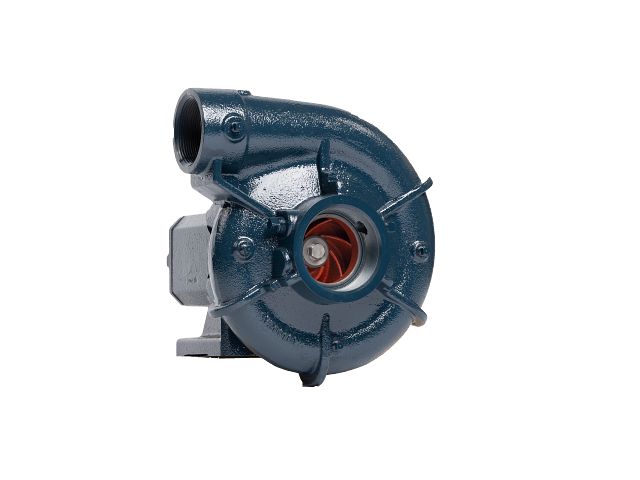
The motor, engine, or tractor PTO is already on site, so the missing piece is a Franklin Electric frame mount self-priming pump that can bolt to it. The pump sits on its own bearing frame, so you choose the power source instead of living with one bolted on at the factory. The FBSTF, FMIT, and FTT split the work by flow and by how dirty your water is.
Setup takes more care than an all-in-one pump. In return, you get drive choices and service access that a motor-mounted pump cannot offer.
Belt, Direct, Engine, or PTO: Matching the Drive
Pick by flow and by how dirty the water is. The FBSTF is the general-purpose choice for irrigation and site transfer. The FMIT adds a non-clogging impeller that passes mud, sand, and silt up to 10% by volume, and the FTT is the high-volume option at up to 740 GPM.
- Belt drive: pulley sizes set the pump speed, so you can tune it to your flow and head. All three series accept a belt.
- Direct drive: a coupling joins the pump shaft to a motor or engine. Alignment has to be right before the first start.
- PTO shaft: the FMIT can run from an electric motor, gas engine, belt drive, or PTO shaft, which makes it the tractor-friendly choice.
- Rotation: the FBSTF turns clockwise facing the shaft, and the FTT turns clockwise viewed from the motor end.
FBSTF, FMIT, and FTT at a Glance
| Series | Sizes | Impeller | Drive options | Best fit |
|---|---|---|---|---|
| FBSTF | FBSTF-1, -2, -3, -5 | Semi-open cast iron, non-clogging, blind hole | Belt or direct drive | Irrigation, construction, light industrial |
| FMIT | FMIT-20, -30, -40 | Semi-open cast iron, non-clogging | Electric motor, gas engine, belt drive, or PTO shaft | Dewatering and water with mud, sand, or silt |
| FTT | FTT-20, -30, -40 (2, 3, 4 inch ports) | Two-vane enclosed | Belt or direct drive | High flow up to 740 GPM, water trucks, municipal |
FBSTF: General Service on a Bearing Frame
The FBSTF uses a cast iron volute with tapped openings for priming, venting, and draining. Its semi-open impeller has a blind hole, so the liquid never reaches the shaft threads.
A heavy bearing frame with sealed bearings and a keyed stainless shaft carries the load. The seal uses carbon and ceramic faces with Viton elastomers, and both ports are threaded FNPT.
FMIT: Mud, Sand, and Silt Up to 10%
The FMIT is the pick when your source carries grit. Its non-clogging impeller passes mud, sand, and silt up to 10% by volume without pre-filtering.
The FMIT-20, FMIT-30, and FMIT-40 step up in flow on the same cast iron platform, so you can move up a size without changing your drive setup.
FTT: 740 GPM and 140 Feet of Head
The FTT covers large jobs with flows up to 740 GPM and heads up to 140 feet. It is rated for 75 PSI working pressure and water up to 212 degrees F.
The FTT-20, FTT-30, and FTT-40 carry 2, 3, and 4 inch NPT ports. All three share a two-vane enclosed impeller and an FKM mechanical seal.
Replacing an older unit on a water truck? This guide to upgrading to the FTT-40 covers the coupler adapters.
Pump End, Drive Parts, and the Total Cost
Size moves the cost first. An FTT-40 costs more than an FTT-20, and a bare pump end costs less than a unit with a motor or engine already mounted.
Drive parts add to the total: pulleys, belts, guards, and couplers. Send us your setup and we will quote the exact pump and pieces.
Plug-In Jobs and Flooded Inlets Belong Elsewhere
- You want a simple plug-in electric pump. A close-coupled self-priming pump skips alignment and fits small pads.
- You need a ready-to-run portable unit with its own engine. See our gas engine self-priming pumps.
- Your water source sits above the pump. A standard frame mount centrifugal pump may do the job without self-priming.
Frequently Asked Questions
What are common problems with self-priming pumps?
Common problems with frame mount self-priming pumps start at the drive. Poor shaft or pulley alignment and wrong belt tension wear out bearings and seals early. Wrong rotation keeps the pump from moving water. On the water side, sand and silt wear the impeller over time, which is why the FMIT uses a non-clogging impeller built for up to 10% solids. Checking alignment, belts, and bearings on a regular schedule heads off these issues.
What type of pump is best for dirty water?
The type of pump that is best for dirty water is one with a non-clogging, semi-open impeller that can pass solids without jamming. In this group, the FMIT is built for it, since it handles mud, sand, and silt up to 10% by volume. The FBSTF also uses a semi-open, non-clogging impeller for water with light solids and debris. Place a strainer on the suction line if your source holds sticks or rocks, and send us a description of the water so we can match a model.
What are belt-type water pumps?
Belt-type water pumps are pumps turned by a belt and pulleys instead of a motor bolted straight to the pump. The pump end sits on its own bearing frame, and the belt links it to an electric motor, engine, or tractor. Pulley sizes set the pump speed, so you can tune flow and head. The FBSTF, FMIT, and FTT all accept belt drive. Keep the belt tensioned and the pulleys lined up to protect the bearings and seal.
Ready to order? Send us the model number, or your flow, head, and drive type, and we will confirm the right Franklin Electric pump before it ships.