

Franklin Electric Surface Pumps
- Jet, self-priming, close-coupled, frame mount, and engine driven pumps
- Pumps sit above the water for easy service
- AG Series close-coupled pumps move 65 to 900 GPM
- Gas engine and hydraulic drives for sites without power
- Send us your model number and we will confirm the right fit
Franklin Electric Self-Priming Pumps
Franklin Electric Hydraulic Driven Self-Priming Pumps
Franklin Electric Jet Pumps
Franklin Electric Shallow Well Jet Pumps

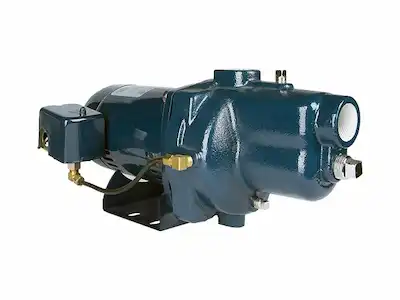
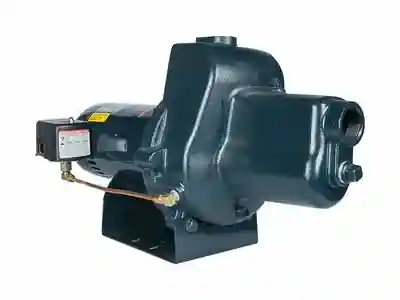
Franklin Electric Convertible Jet Pumps


Frame Mount Centrifugal
Hydraulic Driven

Franklin Electric Specialty Centrifugal Pumps


Franklin Electric Frame Mount Self-Priming Pumps


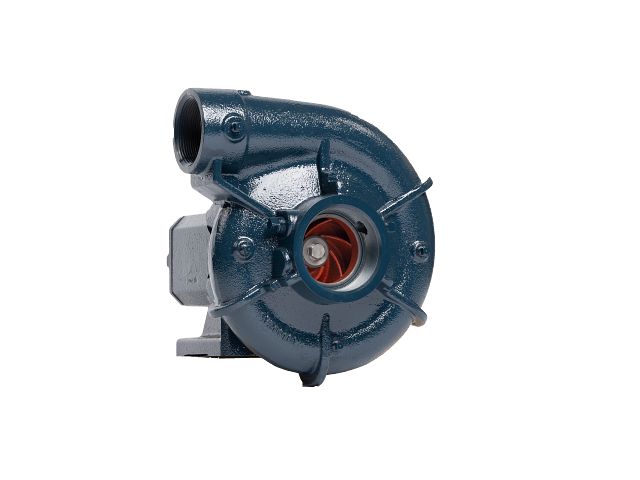
Frame Mount


Engine Driven Centrifugal
Franklin Electric Gas Engine Driven Self-Priming Pumps


Engine Driven


Close-Coupled Centrifugal Pumps
Franklin Electric Close-Coupled Self-Priming Pumps


Close-Coupled Centrifugal


Where is your water, and what will turn the pump? Answer those two questions and the right Franklin Electric surface pumps narrow from dozens of series to a handful. Every pump in this section sits above the water line, where you can see it, reach it, and fix it.
Use the table below to match your job to a pump family. Then jump to that family's page for models and specs.
Franklin Electric Surface Pumps, Matched to the Job
Jet pumps supply homes from wells, and self-priming pumps lift water from ponds and ditches. Close-coupled centrifugal pumps move big volumes of clean water. Frame mount pumps take belt, PTO, or hydraulic drive, and engine driven pumps work where there is no electric power.
| Your job or situation | Pump family | Series to look at |
| Household water from a well up to 100 feet deep | Jet pumps | VersaJet, VersaJet Pro, SWJ, C Series, RM2 |
| Lawn sprinklers, pond or ditch irrigation | Self-priming pumps | Turf Boss, FBSE, FBSEF |
| Dewatering or water with sand and silt | Self-priming pumps | FMIT, FMIG, FMIH |
| High-volume clean water, hot water, boosting | Close-coupled centrifugal | AG, D, DR, FAC, HC, XS |
| Belt, PTO, or tractor hydraulic drive | Frame mount centrifugal | XS, FACT, FAOT |
| Water truck fill and spray, center pivot end guns | Frame mount centrifugal | XS water truck pump, end gun booster |
| Remote site with no electric power | Engine driven | FNG-23V, FACGF |
The Five Surface Pump Families
Jet Pumps
Jet pumps pull water from a well and pressurize a home's plumbing. Shallow well models lift up to 25 feet, and the Convertible Pro (RM2) reaches water up to 100 feet. Compare all five series on the Franklin jet pump page.
Self-Priming Pumps
Self-priming pumps clear air from the suction line on their own after the first fill, so they can sit above a pond or ditch. The FMIT handles water with up to 10% mud, sand, and silt. See electric, gas, and hydraulic versions in the Franklin self-priming pumps.
Close-Coupled Centrifugal Pumps
A close-coupled pump bolts straight to its motor, so it is compact and needs no alignment. The AG Series moves 65 to 900 GPM, the FAC handles water up to 212°F, and the HC runs motors up to 50 HP. Compare them in the close-coupled pump section.
Frame Mount Centrifugal Pumps
Frame mount pumps ride on their own bearing frame and take power from a belt, PTO shaft, engine, or hydraulic motor. The XS Series comes in 9-inch and 13-inch sizes, and the open-impeller FAOT passes light solids. Browse the frame mount pump options for water truck and hydraulic models.
Engine Driven Pumps
Engine driven pumps bring their own power. The FNG-23V runs on a 23 HP Briggs and Stratton Vanguard V-Twin, and the FACGF comes with a choice of engines. Find them with the gas engine driven pumps.
What to Send for a Surface Pump Quote
- Your current model number, if you are replacing a pump. A nameplate photo works too.
- The water source, such as a well, pond, tank, or ditch, and how far below the pump the water sits.
- What is in the water, such as clean water, sand, silt, or debris.
- The flow you need in gallons per minute, and how high and how far the water must go.
- Your power source: single-phase or three-phase electric, gas engine, belt, PTO, or tractor hydraulics.
Frequently Asked Questions
What is the difference between a surface pump and a submersible water pump?
The difference between a surface pump and a submersible water pump is where the pump sits. A surface pump sits above the water and pulls water up through a suction pipe, so it is easy to reach, service, and replace. A submersible pump sits under the water and pushes it up, which lets it reach much deeper sources. Surface pumps suit shallow wells, ponds, tanks, and transfer jobs. Submersible pumps suit deep wells where suction cannot reach.
Which water pump is best for 25 feet height?
For lifting water 25 feet up from the source, a shallow well jet pump or a self-priming pump is usually the best fit. Franklin's VersaJet, VersaJet Pro, and SWJ jet pumps all lift from up to 25 feet for home water. The Turf Boss self-priming pump also lifts from up to 25 feet for sprinkler systems. If your water sits right at 25 feet or drops in dry months, choose a convertible jet pump so you have room to go deeper.
What are centrifugal pumps used for?
Centrifugal pumps are used to move water and other thin liquids in steady, high volumes. Common jobs include farm and turf irrigation, water transfer between tanks, pressure boosting, hot water circulation, dewatering, and filling water trucks. Franklin builds close-coupled centrifugal pumps like the AG Series, which moves 65 to 900 GPM, and frame mount pumps like the XS Series for belt, engine, and hydraulic drive. Jet and self-priming pumps are also centrifugal designs with added suction features.
Is it possible to pump water without electricity?
Yes, it is possible to pump water without electricity by using an engine or hydraulic drive. Franklin gas engine pumps, such as the FNG-23V and FACGF, carry their own engine and run anywhere. Self-priming gas models like the FMIG and FBSGF add the ability to lift water from a pond or ditch. Hydraulic driven pumps, like the FMIH and XS hydraulic models, run off a tractor's hydraulic system through an SAE spline shaft.
Send us your current model number, or tell us your water source, flow, and power, and we will quote the right Franklin surface pump.